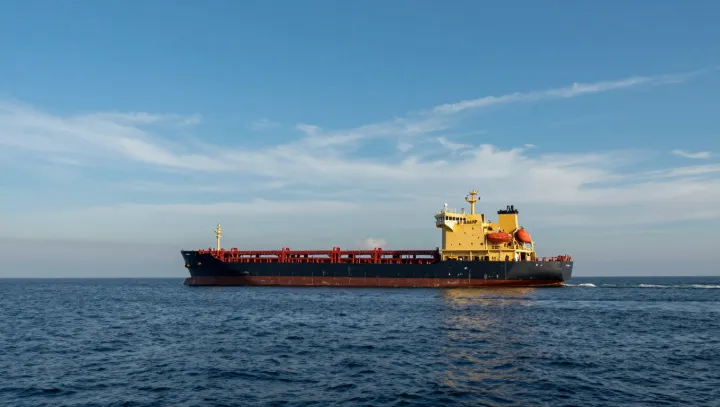
A towering hull can ride in water barely deeper than a city bus, while a steel bolt beside it vanishes to the bottom in a single drop. The contrast is not a paradox but a precise negotiation between weight, volume and the water’s upward push.
The key actor is buoyant force, defined in Archimedes’ principle as the weight of the displaced fluid. A ship is mostly hollow volume enclosed by steel, so its overall, or average, density falls below that of water. As the hull sinks into the surface, it displaces a volume of water whose weight can match the ship’s mass, creating static equilibrium between gravity and buoyancy.
A bolt, by contrast, is almost pure solid steel. Its density is several times that of water, with negligible internal voids. Even when fully submerged, the volume of water it displaces weighs far less than the bolt itself. Gravity dominates, buoyant force cannot balance the load, and the object accelerates downward. Naval architects exploit this same density and displacement calculus, using buoyancy reserves in the hull as a design “margin of safety” analogous to an engineer’s safety factor, allowing massive vessels to navigate shallow channels that would seem incompatible with their scale.