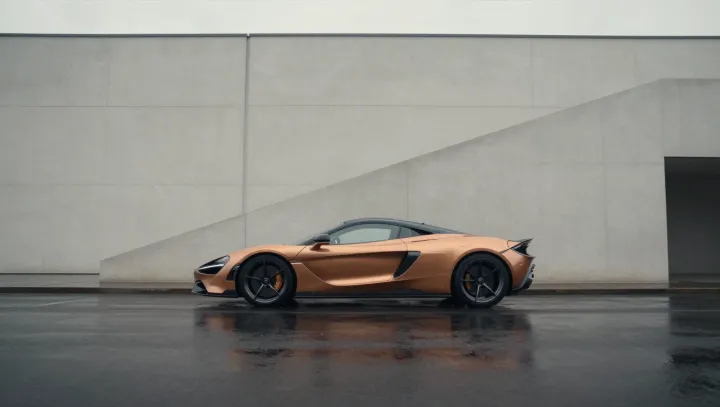
Pale blues, dusty pinks and washed-out greens do not just look calm; they literally give your visual system less to fight with. Muted colors reduce chromatic contrast and luminance differences, which means fewer high-intensity edges for early visual neurons to encode. That drop in contrast lowers overall firing rates in the visual cortex and trims what neuroscientists call sensory gain, the amplification step that makes a scene feel urgent or noisy.
With less contrast on the surface, the brain leans harder on internal models of the world. Mechanisms like predictive coding and Bayesian inference fill in missing detail, treating the scene as familiar and low risk. Instead of tracking every sharp boundary, the system prioritizes global contours and Gestalt grouping, which increases the sense of coherence. Entropy in the incoming signal falls, so the brain spends less metabolic energy resolving conflicts between what it expects and what it receives.
That combination of lower neural arousal and higher perceptual stability is what registers as calm. The image carries less raw information, yet the brain experiences more control: fewer spikes of contrast-driven alertness, more confidence in its own predictions. Soft palettes, in effect, strip away visual drama while reinforcing the quiet message that nothing here is about to change.