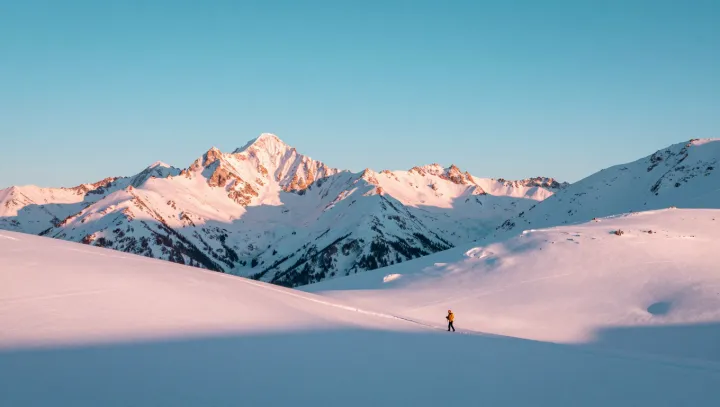
Sheer rock walls rise along the Taihang Mountains, their profiles knife‑edge sharp even though the bedrock dates back more than a billion years. The scene looks like it should belong to a young, restless landscape, not to rocks that have been exposed to weathering for geological ages.
The key lies in rock mechanics and long‑term tectonic uplift. Much of the Taihang range is built from highly consolidated sandstone and crystalline metamorphic rock with high compressive strength. Softer cover layers have already been stripped away by erosion, a process known as differential erosion, leaving only the most resistant strata to face the elements. Instead of rounding the terrain, rivers and gravity concentrate their cutting power into fractures, joints and bedding planes, carving narrow gullies and freeing tall cliff faces.
Active crustal uplift keeps resetting the system. As the plateau slowly rises, streams gain potential energy, increasing their capacity for vertical incision. This accelerates downcutting rather than slope smoothing, maintaining high local relief. Structural geology also matters: near‑vertical faults and joint sets act as predefined planes of weakness, so blocks detach cleanly and fall, renewing steep slopes. Mass wasting and rockfalls then sweep away debris, exposing fresh bare rock before soil can accumulate and gentle hills can develop.
Climate adds another layer of control. Cycles of freeze–thaw weathering and thermal expansion exploit existing fractures without needing deep chemical alteration, ideal for preserving abrupt faces in hard rock. Over long intervals, the apparent paradox resolves into a balance of forces: uplift and structural control continually generate new cliff surfaces at roughly the same pace that erosion tries to wear them down, allowing ancient rock to sustain a young, angular silhouette.