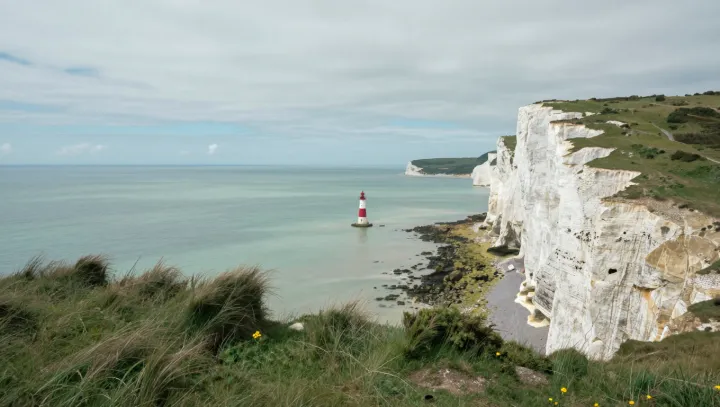
White chalk, not brass or steel, did some of the hardest work in the Dunkirk drama. A continuous bright band along England’s channel edge offered what no instrument of that moment could match: a high contrast, easily recognised target that cut through haze, smoke and cockpit stress when crews were trying simply to stay alive.
Striking is the fact that these cliffs mattered most when technology faltered. Aircraft compasses, gyro instruments and primitive radio direction finding all depended on calm hands and clear signals, yet over the French coast cockpits shook, interference rose and fuel gauges sank. Against that uncertainty, the pale escarpment formed a fixed reference line, its albedo against darker sea and land giving pilots and ship lookouts an immediate cue for bearing and distance, much like a crude but reliable visual gyro. Short. Then another thought stretches on, as the cliffs’ near‑vertical profile simplified coastal identification at low altitude, reducing the risk that exhausted crews would misread a bay or river mouth and lose the narrow corridor back to allied control.
Counterintuitive is how an old stretch of geology outperformed many purpose built aids. Chalk, a soft carbonate rock, erodes into sheer faces that reflect light even under overcast skies, so sailors scanning with basic optical rangefinders could pick out the English side long before hulls crossed the midpoint of the channel. That persistent brightness under variable illumination turned the shoreline into a kind of analog signal, stabilising orientation for small private craft and naval escorts alike as they shuttled between French beaches and home water, until engines cooled and guns fell silent at the base of those cliffs.