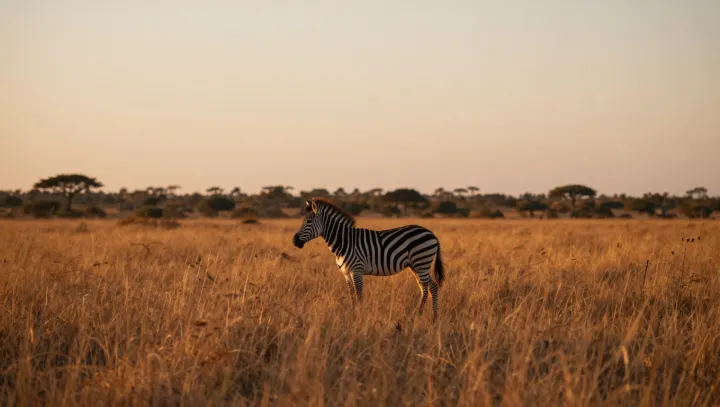
Striped bodies, not claws, set the terms of many hunts. Against a charging lion, a zebra herd behaves less like panicked prey and more like a distributed alarm network, as dozens of eyes and pinnae sweep the grass and trigger early flight at distances that shred a stalker’s energy budget before contact.
The real surprise is that those theatrical stripes are not decoration but a visual weapon. Studies of motion dazzle, a psychophysics effect, show that high‑contrast bands warp a pursuer’s depth and speed perception when the herd moves as a churning block, so a lion that must fixate on a single shoulder or hock instead sees a moving barcode that scrambles targeting in the final seconds of the rush.
Equally underestimated is the chaos in their escape algorithm. Rather than simple straight‑line flight, zebras inject abrupt zigzags and stop‑start bursts that exploit limits in a lion’s vestibular system and muscle fatigue; the predator’s power sprint is short, so every forced turn is a tax on anaerobic capacity that quickly converts a clean chase into a low‑margin gamble.
Most decisive, though, is the hardware hidden in those hindquarters. Musculoskeletal measurements show that a kick from a large zebra can deliver forces high enough to fracture a lion’s skull or ribs, and this potential cost shifts the risk calculus: a lion facing a wheel of hooves and synchronized group defense is not confronting fragile grazers but an integrated, high‑penalty security system built out of stripes, nerves and bone.