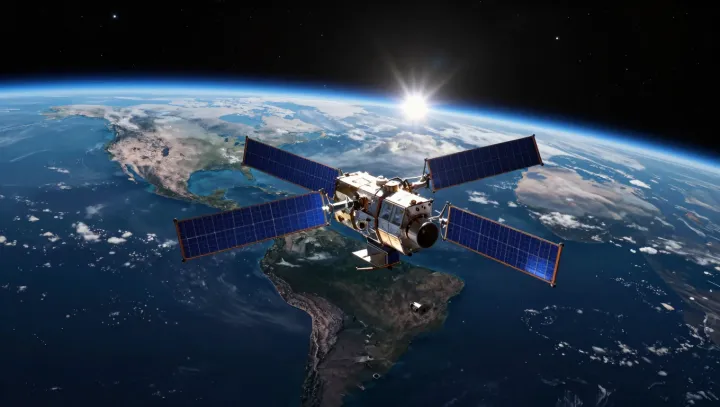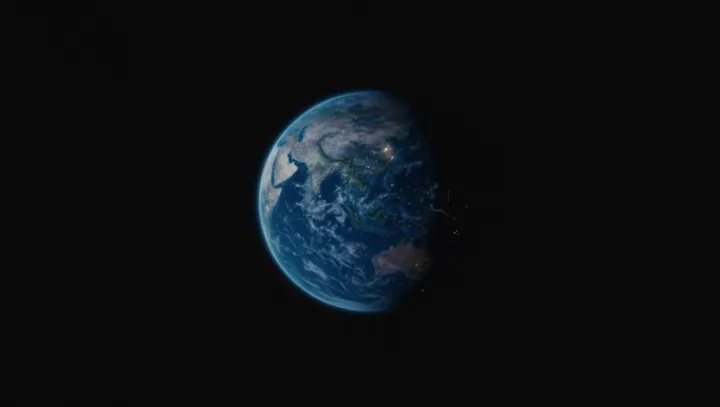
Darkness, not the famous blue, dominates the astronaut’s window. Only when night sweeps across continents does Earth admit its most intimate secret: a thin, cracking grid of light that marks where people cluster and where they do not. From orbit, coastlines bend not by geology but by sodium vapor lamps, LED arrays and fluorescent spill tracing highways, ports and megacities in harsh, artificial geometry.
It is a blunt fact that this glitter is wildly uneven. Vast interior regions sit almost black, while narrow coastal strips burn with electrical overdrive, revealing the hard bias of global urbanization and economic density. Orbital photographs, fed into radiance calibration and spatial clustering algorithms, now act as an informal census, mapping informal settlements, tracking power outages and exposing energy inequality without a single survey form.
What unsettles many crews is how breakable the pattern looks. A few dim corridors link whole regions; sever those and the map would snap apart. The glow also erases stars, a planetary-scale case of light pollution that alters circadian rhythm and even melatonin secretion far below. From hundreds of kilometers up, human civilization appears not as a grand continent-spanning mass, but as a fragile wiring diagram laid over a still-dominant dark planet.