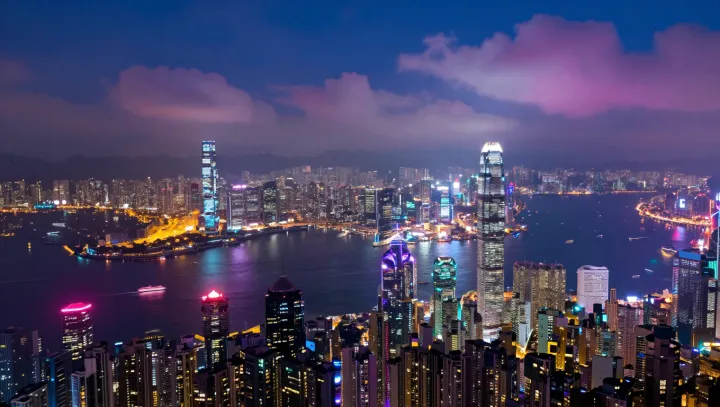
Darkness here is not an accident. A wall of abrupt granite rises behind one of the planet’s most overexposed skylines, throwing the inner harbor into a bowl of glass and the outer slopes into near-rural night. From the ferry deck, neon dissolves into silhouette, and then into a sky that actually has texture again.
The real surprise is how little distance is doing the work. Density stays high along the shoreline, yet steep relief forces streets and towers to stack inward, so the brightest façades face water, not wilderness. Zoning codes lock that pattern in place, capping building envelopes and floor-area ratios on the ridgelines, and reserving much of the upper terrain for parks and reservoirs instead of rooftops and billboards.
This is not romance about untouched nature; it is engineering. Shielded luminaires, low color temperature LEDs, and strict lumen caps cut skyglow at the source, while curfews dim sports fields and promenades once commuter traffic ebbs. Add the mountain’s own shadow geometry to those rules, and the result is a rare optical split-screen: a commercial core bright enough for satellite imaging to pick out individual corridors, sitting within a short ferry ride of hills where the Milky Way still runs, unbroken, from horizon to horizon.