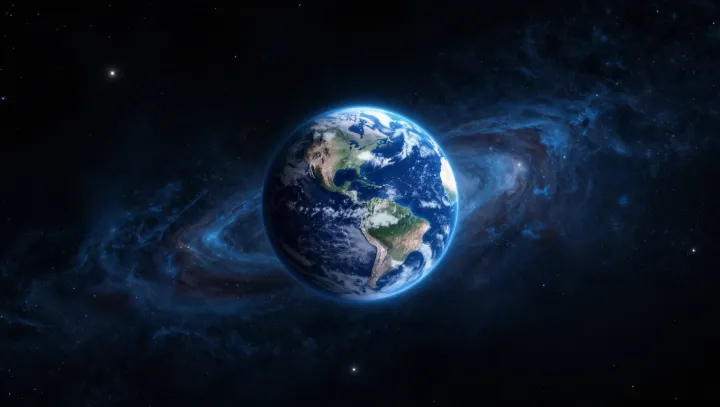
Earth, many astronomers now argue, looks less like an outlier and more like a basic template. Data from transit surveys and radial-velocity catalogs suggest that small planets near temperate orbits often carry large water inventories, not thin surface seas but global oceans hundreds of kilometers deep, capped by high-pressure ice.
What sounds exotic is, by current estimates, statistically ordinary. Population synthesis models that fold in disk chemistry and planetary migration hint that volatile-rich super-Earths and sub-Neptunes are common, and that a significant fraction sit in the so-called circumstellar habitable zone where liquid water can persist at the surface or beneath an ice shell. Under high gravity and thick atmospheres, such oceans would be stable over geological timescales.
The real surprise sits elsewhere: dry land may be the rarity. If many rocky planets lock most silicates beneath deep seas, classic processes such as plate tectonics and silicate weathering operate differently or barely at all, reshaping climate feedbacks and carbon cycling. Astrobiologists now treat photochemistry in water-rich atmospheres and ocean chemistry at high pressure as standard boundary conditions, with Earth’s exposed continents recast as a local quirk rather than a cosmic rule.