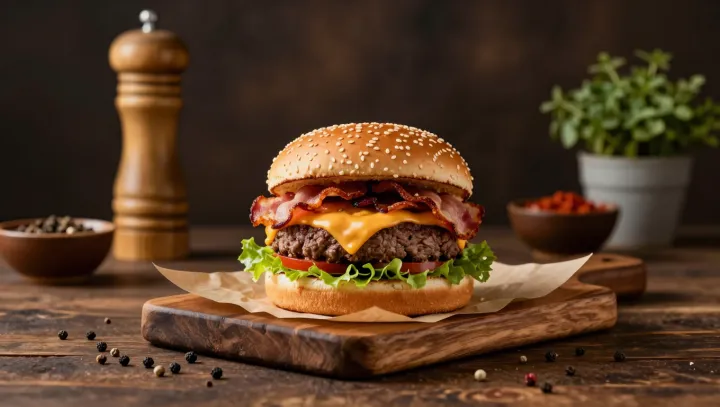
A bacon cheeseburger behaves less like comfort food and more like a precision flavor device. Its structure quietly runs the same fat–acid–aroma logic that snack formulators encode into chips and flavored crackers, only here the algorithm is built from grill smoke, melted dairy fat, and a split sesame bun.
The first unfair advantage sits in fat, and not just quantity. Beef tallow, bacon lipids, and cheese fat deliver a dense hit of triglycerides while carrying hydrophobic aroma molecules that bloom at mouth temperature, a process that sensory scientists map with gas chromatography and olfactometry to tune packaged snacks to near-irresistible intensity.
Equally calculated is the acid. Pickles and ketchup do more than cut richness; their acetic and citric acids shift saliva pH and sharpen volatility of pyrazines and aldehydes from the Maillard reaction on the patty surface, the same interaction flavor chemists exploit when they pair acidulants with roasted or “grilled” notes in reconstituted meat chips.
Most underestimated is aroma, which does the heaviest lifting. Smoky bacon yields phenolic compounds, seared beef throws heterocyclic amines and additional pyrazines, while the bun and onions contribute caramelized sugars; together they form a multi-node odor profile that lights up olfactory receptor arrays in patterns almost identical to those produced by layered artificial flavor systems.
What looks like a casual diner order is, in biochemical terms, a compact reward engine. The burger’s mix of lipid mouthfeel, acid-triggered brightness, glutamate-driven umami, and high-density odorant release targets dopaminergic pathways with the same strategic precision that ultra-processed snack brands buy from flavor houses.