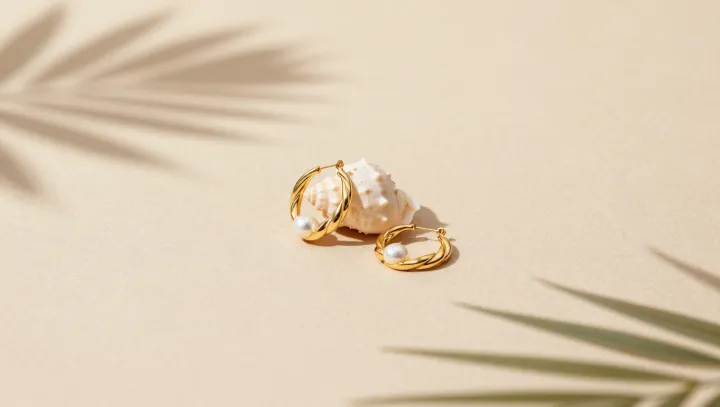
Soft light on one rough shell and a lone pair of hoops is not restraint. It is a sales engine. By stripping the frame to near zero, brands reduce cognitive load and push the visual system into what researchers call figure–ground dominance, where one object takes total command of attention.
Sparse jewelry images, counter to glossy convention, tend to score higher on measures of recall and click‑through in A/B tests, precisely because the brain is not busy running crowd control on candles, silk, perfume bottles and scattered books. With fewer competing stimuli, the orbitofrontal cortex can assign reward value more cleanly, and the viewer experiences the hoops as rare rather than merely one asset in a lifestyle bundle.
The real trick is that empty space behaves like price anchoring. When almost nothing surrounds a product, the visual field reads as curated, not poor, so the mind infers selectivity, scarcity, even waiting lists. One quiet pair of hoops on a shell does what a table full of props cannot: it hands the viewer an uncluttered stage and invites them to cast themselves as the missing character.