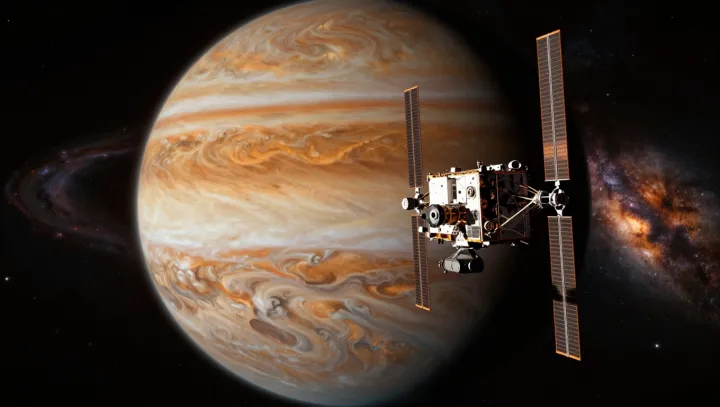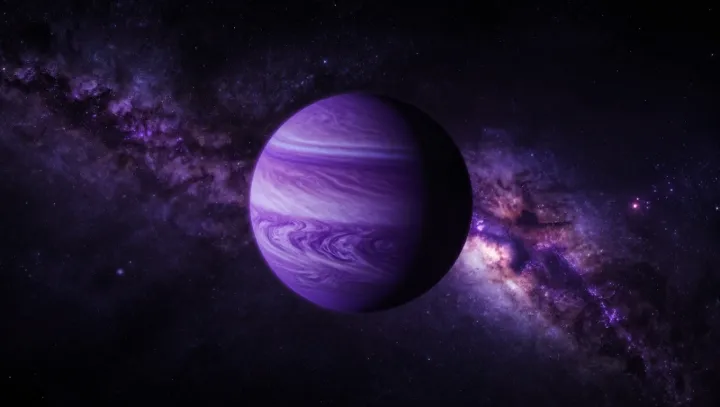
Purple air, not rocky ground, is the real instrument here. A storm‑lashed gas giant hotter than a blowtorch swings in front of its star, and that brief alignment turns its atmosphere into a filter, imprinting razor‑thin spectral scars onto the starlight that slips through the planet’s windswept limb.
The bold claim is that this distant furnace can be treated like a wind tunnel and a chemistry bench at once. During transit spectroscopy, atoms and molecules such as hydrogen, sodium or titanium oxide absorb very specific wavelengths, producing absorption lines that betray temperature, pressure and composition. Because the planet is tidally locked, one hemisphere bakes while the other cools, and that contrast drives supersonic jets. Tiny shifts in those same lines, by the Doppler effect, reveal how fast gas is racing from day side to night side, turning a single pixel of purple glow into a crude global weather map.
More radical still is the idea that this one extreme world can calibrate theories for thousands of quieter ones. Radiative transfer models and general circulation models are tuned until they reproduce its measured spectrum and inferred wind speeds; only then are they trusted on smaller, cooler planets where signals are weaker. The price of that knowledge is brutal heat and storms on a world no probe will ever visit, yet its faint fingerprints in starlight keep rewriting the script for alien skies.