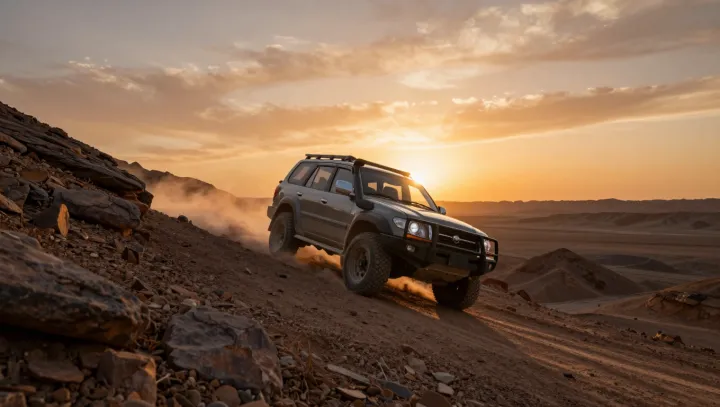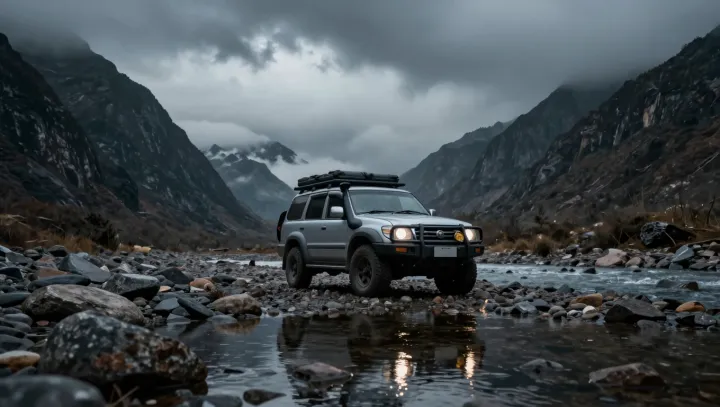
Grip on wet rock looks like magic; it is not. Under that boxy shell, engineers treat the SUV as a load‑distribution machine, not a style object, and they tune everything so each tire keeps a stable, rising normal force as the surface turns from smooth to jagged.
The big surprise is that weight helps. With long‑travel independent suspension and carefully chosen anti‑roll bar stiffness, the chassis stays relatively flat while each wheel follows sharp rock edges. That keeps contact patches square, instead of lifting a corner and dumping force to a single tire. Kinematic tricks in the control arms set camber gain and toe change so the tread blocks meet the rock almost perpendicularly when the axle articulates, raising frictional shear capacity right where the slope hurts most.
Equally counterintuitive is how soft feels strong. Engineers specify low‑pressure, high‑void all‑terrain tires whose carcass and sidewall act like a slow‑flowing solid; in material‑science terms, viscoelastic hysteresis turns tiny rock asperities into micro‑anchors inside the rubber. As the surface gets rougher, more edges engage, and the effective coefficient of friction climbs rather than falls, even with a film of water present to reduce adhesion.
Electronics quietly finish the job. Modern torque vectoring, built on closed‑loop wheel‑speed feedback and a locking center differential, meters driveline torque away from any tire that starts to spin and into those still hooked on protruding rock. Hill‑descent control holds brake pressure at each corner just below the threshold of slip, exploiting static friction instead of kinetic skid. Heavy, square, and seemingly clumsy, the SUV grips harder because every subsystem is biased toward exploiting roughness, not fighting it.