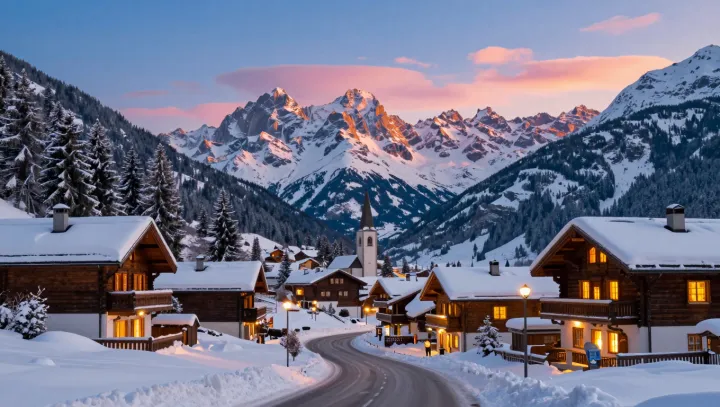
Winter, not summer, turns this Alpine village into a flare on orbital sensors. Thick snow, electric heat and tourism concentrate light so intensely that night‑time satellite imagery records a sharp spike in radiance. Against dark conifer slopes and long polar‑tilted nights, every bulb, ski floodlight and hotel sign stands out with exaggerated contrast.
The oddity starts with snow physics. Snow has high albedo, bouncing artificial light upward instead of letting it sink into soil or asphalt, which boosts the signal picked up by instruments such as the Visible Infrared Imaging Radiometer Suite. Short days extend lighting hours. Street lamps switch on earlier. Chairlifts run under high‑intensity luminaires. Ice‑rimmed roofs and frozen air scatter photons, so one watt of power yields a disproportionate glow when seen from orbit.
Economics then pushes the effect even harder. Winter tourism compresses population density into a narrow valley floor, while demand for safety on slopes, roads and parking areas encourages over‑illumination. Energy efficiency standards help, yet not enough to offset longer operating times and decorative lighting that signals prosperity to visitors. Surrounded by unlit ridges and sparsely settled high ground, the village forms a compact light island, which satellite algorithms mark as one of the brightest pixels in the region.