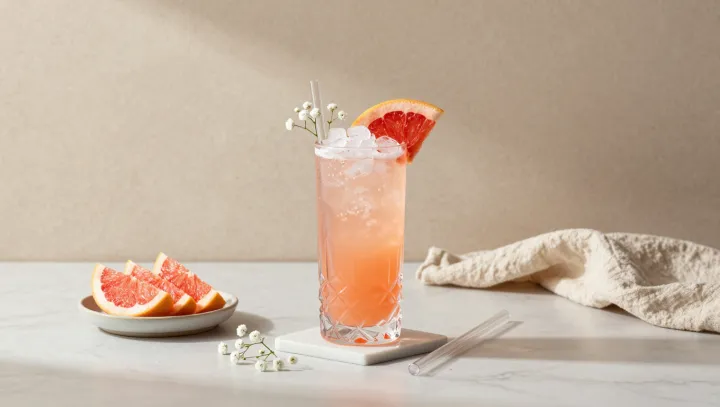
A cold glass, a cut grapefruit, a quick hiss of sparkling water. That simple setup already outperforms many glossy wellness drinks lined up under bright lights. The reason is not romance. It is chemistry, process engineering, and how your brain reads flavor signals.
The blunt truth is that your thirty‑second spritzer wins because it skips the industrial gauntlet. Packaged drinks are designed for distribution, which means heat treatment, oxygen exposure, and long contact with light. Thermal pasteurization degrades ascorbic acid, the actual vitamin C molecule, and strips volatile terpenes and aldehydes that carry grapefruit’s aroma. Each extra day on a warehouse pallet invites more oxidation and polymerization of these compounds, even when labels still promise freshness.
By contrast, a just‑cut grapefruit behaves like a live broadcast. Volatile molecules such as limonene and nootkatone surge into the air before they can evaporate or react away, and dissolved carbon dioxide from the sparkling water pushes them toward your nose in a steady stream. That aroma hit is not cosmetic; retronasal olfaction works with gustatory receptors to amplify perceived sweetness and brightness, so your brain tags the drink as fresher even without added sugar. Meanwhile, the vitamin C has had almost no time for oxidative breakdown, giving your quick spritzer a biochemical edge that no extended shelf life can quietly replace.