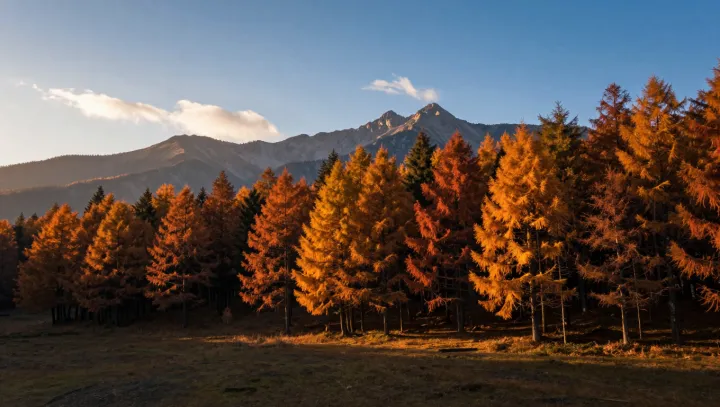
Golden leaves do not follow the weather. They follow light. A shrinking window of daylight hits the canopy first, while temperatures may still wobble between warm afternoons and cold nights, and the trees quietly register that new signal with more precision than any local forecast.
The blunt fact is that trees treat day length, or photoperiod, as their master variable, because photons arrive on a schedule that noise in temperature cannot corrupt, and specialized photoreceptors in leaves and buds convert that changing light profile into molecular orders that travel through the plant. Phytochrome and cryptochrome proteins sense the ratio of red to far red and the duration of darkness, feed that information into the plant circadian clock, and reprogram gene expression so that chlorophyll synthesis is throttled back while senescence genes switch on. Pigments such as carotenoids and anthocyanins then remain or accumulate, revealing the yellows and reds that were chemically masked by green.
What looks like a soft seasonal fade is in fact a strict shutdown protocol. By using photoperiod as a timing cue, trees avoid being tricked by an unseasonal warm spell that would keep leaves exposed and metabolically active when freezing damage is still likely, and the hormonal cascade involving abscisic acid and ethylene closes stomata, withdraws nutrients into branches and roots, and seals off petioles to let leaves fall on schedule even when thermometers insist that it still feels like late summer.