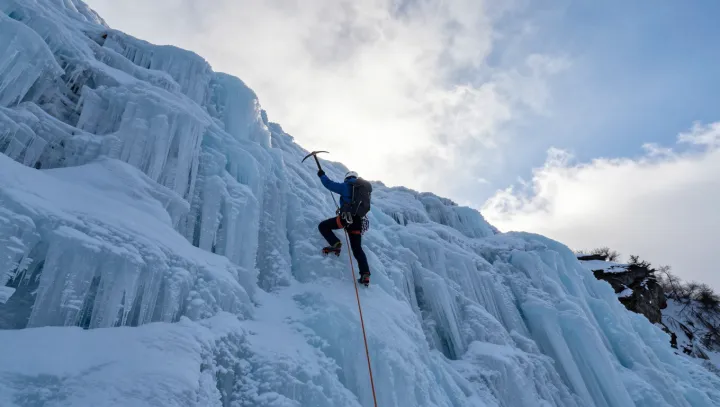
Cold does not kill first. Mismanaged energy does. On a vertical sheet of ice, the body becomes a brutal accounting problem where metabolic heat has to outpace convective and conductive loss or the climber slides toward hypothermia even while working at near marathon output.
The counterintuitive truth is that movement alone is not enough. Shivering thermogenesis, peripheral vasoconstriction, and brown adipose tissue activity can crank up internal heat, yet without constant caloric resupply the deficit deepens, and climbers can lose measurable body mass in a single push. Elite alpinists front-load dense fats, simple sugars, and electrolytes, then drip-feed gels, cheese, and hot drinks from insulated flasks to keep blood glucose stable so skeletal muscle can keep contracting and cardiac output stay high.
Gear, not grit, often draws the survival line. Layered synthetic and down systems trap air yet must vent sweat fast or evaporative cooling turns against the climber on every hanging belay. Vapor barriers in boots slow conductive loss into the ice itself, while double boots and over-gaiters protect microcirculation in toes where frostbite silently begins. Hands cycle through mitts and gloves so dexterity never fully disappears and carabiners remain clippable.
Still underrated is strategy. Climbers choose routes and pacing to avoid long, static belays, since inactivity on an exposed stance accelerates core cooling even more than hard swinging of tools. They track urine color and mental sharpness as low-tech markers of hydration and early hypothermia, accepting weight loss as an inevitable side effect, not a badge, because on steep frozen terrain the body that thins out too far simply stops producing enough heat to stay alive.