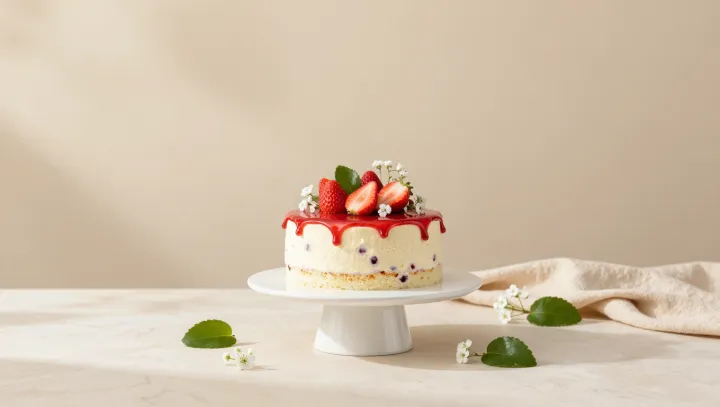
A single glossy strawberry slice beats a hundred polished menu words. That is not marketing hype; it is basic sensory economics in the brain, where vision gets first bid on your expectations long before language joins the auction.
The bias is clear. Visual input arrives fast through the primary visual cortex and recruits the orbitofrontal cortex, the hub that computes reward value, while text has to crawl through language networks before it can influence that same circuitry. A red, seeded surface and a moist crumb deliver concrete, high-resolution cues about sugar, acidity, and texture, which the brain uses to run predictive coding routines about taste and mouthfeel.
Words, by contrast, are abstractions. A phrase like “Madagascar vanilla with ripe summer berries” must be decoded in Wernicke’s area and linked to stored semantic memory, then translated into sensory imagery in higher-order association cortex. Each translation step loses signal and adds uncertainty. The photo-real scene on the plate, driven by bottom-up sensory salience and color-contrast processing, compresses all that into a near-instant forecast: this will be sweet, creamy, slightly tangy.
The hierarchy is ruthless. Multisensory integration centers such as the insula give heavier weight to concrete, modality-specific evidence than to propositional statements, so a real strawberry exploits that weighting. When you see juice glistening and seeds catching the light, dopaminergic neurons begin adjusting reward prediction error even before the first bite, locking in a stronger conviction than any line of menu copy can realistically purchase.