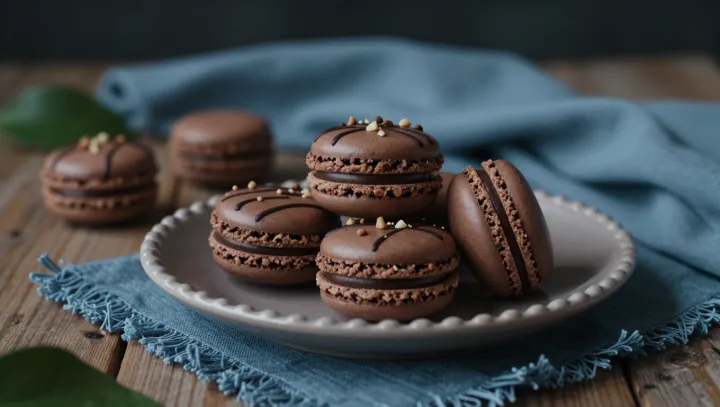
The defining feature of a macaron begins before it enters the oven. A thin skin forms as piped almond meringue batter rests, giving the surface enough strength to resist the initial upward push of heat. The reward appears at the base: a ruffled edge known as the foot.
The skin is less a seal than a guide. Evaporation removes moisture from the exposed surface, while the batter beneath remains softer. In the oven, expanding air and water vapor exert pressure as proteins set through coagulation. With the top offering resistance, some of the rising batter moves outward around the lower edge. There the ruffle emerges. The process is not guaranteed by drying alone: mixing, oven heat and the consistency of the meringue also influence whether feet develop cleanly or shells crack.
Restraint matters as much after baking. Two shells sandwich a creamy filling, while a chocolate drizzle and chopped nuts add texture without concealing the fragile architecture beneath. The shells should cool before filling, since handling them too soon can damage their delicate surfaces. A rest after assembly lets moisture from the filling soften the interiors, giving the cookies their characteristic contrast between a light exterior and a tender center. The finest detail remains at the edge, where a little resistance has given the batter room to rise.