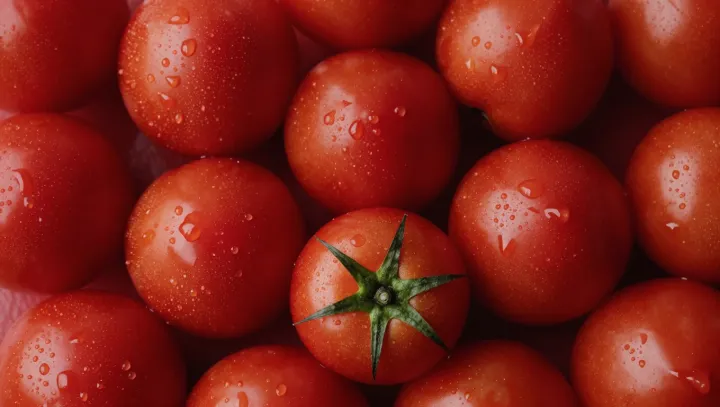
The cherry tomato is a berry hiding in plain sight. It is also a fruit, although its savory flavor and frequent place in salads make vegetable a useful name in the kitchen. The disagreement is not really about the tomato. It is about which question is being asked: how a plant grows, or how its harvest is eaten.
Botany gives the tomato a more exact identity. A berry develops from a single ovary of one flower and has a fleshy fruit wall, known as the pericarp, surrounding its seeds. After fertilization, the ovary enlarges and the ovules become seeds; the tiny chambers inside a sliced cherry tomato preserve evidence of that growth. Size does not settle the matter. A full-sized tomato meets the same botanical definition.
The strawberry turns the label inside out. Its red flesh comes mostly from the receptacle, the part of the flower that supports its reproductive organs, rather than from one swollen ovary. Each speck on its surface is an achene, a small fruit formed from a separate ovary and typically containing one seed. The strawberry is therefore an aggregate fruit, assembled from many ovaries of a single flower. These names trace development, not sweetness or texture. In the bowl, the tomato and strawberry sit side by side; in the flower, their stories have already taken different paths.