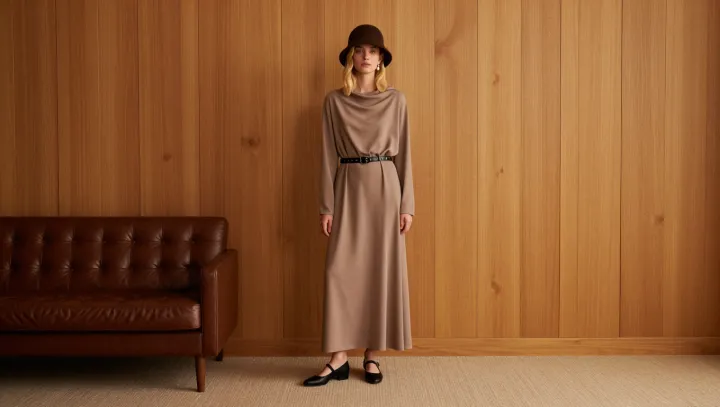
A dark belt gives a loose beige dress definition without demanding a tighter fit. The contrast does the work. Against the pale fabric, it draws the eye to the waist, while the cowl neckline and long skirt retain the easy drape that makes the dress appealing.
Placement matters more than pressure. Set the belt at the natural waist or slightly below it, then leave enough room for the fabric to fall rather than bunch. In garment construction, ease describes the space between clothing and body; a belt can preserve that space above and below its narrow line. A medium width is a practical starting point: substantial enough to register against a maxi dress, but less likely than a very wide belt to dominate the torso. Pull a little fabric over the top edge if the dress needs a softer transition. Let the folds breathe.
The accessories should support the contrast, not compete with it. A brown hat introduces another warm tone near the face, while black flats pick up the belt's depth and keep the hem grounded. Their colors need not match precisely; the balance comes from repeating dark notes across an otherwise light outfit. Keep jewelry restrained if the cowl has generous folds, since the neckline already supplies texture. The effect is deliberate, not rigid. A single dark line holds the eye, and the fabric remains free to move.