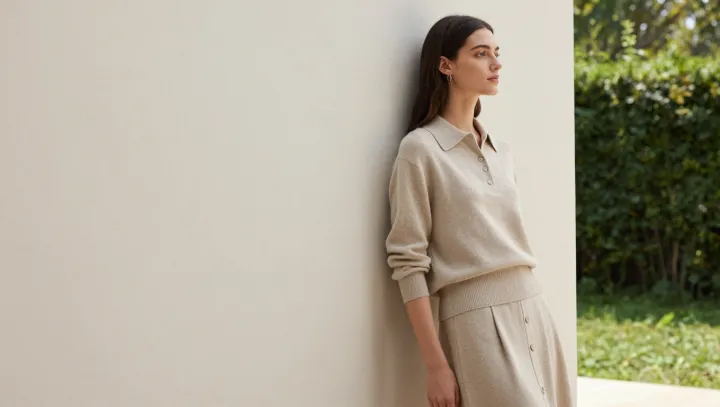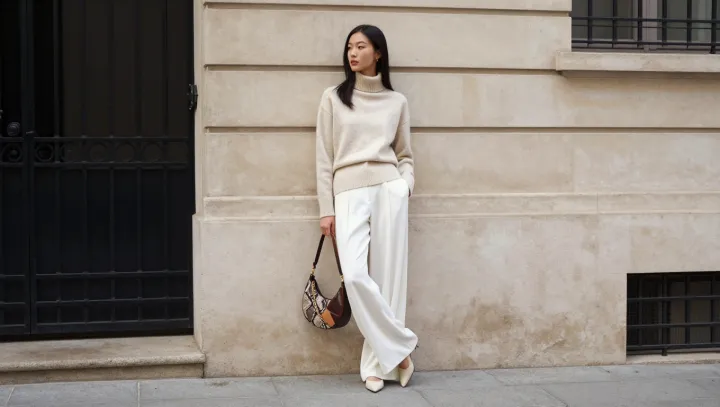
A single shade can do more than a clash of colors. In an ivory knit outfit, a belted turtleneck and wide-leg trousers make their case through surface and shape rather than contrast. The eye still finds distinctions: a turn at the waist, a fall of fabric, a change in light.
Texture is the quieter form of distinction. Individual stitches catch light at different angles, producing small highlights and shadows even when the yarn is the same color. A raised rib reads differently from a smoother knit because its ridges interrupt the surface; neither needs a competing hue to register. The belt adds another line of definition, drawing the eye inward before the trousers open into a wider silhouette. Proportion does the work. Against the contained waist, the generous legs give the outfit movement and prevent the matching pieces from reading as one uninterrupted column.
Light, not color, supplies the final variation. Folds in the trousers can appear darker where they turn away from a light source, while exposed areas look brighter; the effect shifts as the wearer moves. Drape matters just as much: fabric that hangs freely creates longer, softer shadows than fabric held close by a belt. The result depends on those differences remaining visible, so an outfit viewed in flat light may seem more uniform than it does beside a window. In that changing relief lies the appeal of dressing in one shade: a surface that never quite stays still.