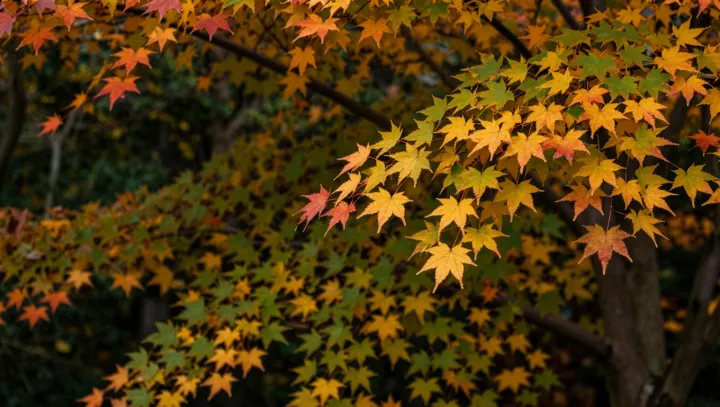
Red maple leaves are not simply revealing a hidden color; many are making one as they prepare to fall. Yellow follows a different script. As chlorophyll breaks down, carotenoids that have helped leaves capture light during the growing season become easier to see, while red anthocyanins may be newly produced.
That late investment looks extravagant, but it may serve a purpose. Before a leaf separates from its branch, a tree can reclaim some of its nitrogen and other nutrients, storing them for later growth. Anthocyanins may act as a sunscreen, absorbing light that could otherwise damage the leaf as its photosynthetic machinery is dismantled. Protection could buy time. Scientists have also proposed other explanations for red pigments, and their benefits may vary with species and conditions; no single account settles every case.
The tree's chemistry, not the calendar alone, shapes the display. Cool temperatures and bright light can favor anthocyanin production, while genetics helps determine which maples make substantial amounts. Sugars accumulating in a leaf can also support pigment production, though the relationship between sugar and color is not a simple guarantee. Not every maple turns red. Some leaves become yellow or orange as chlorophyll fades, and pigments degrade at different rates. What looks like a single act of departure is a series of chemical changes, carried out in a leaf that is still, for a little while, at work.