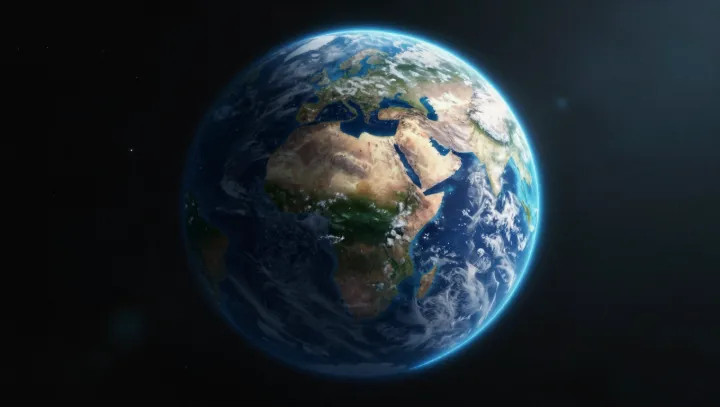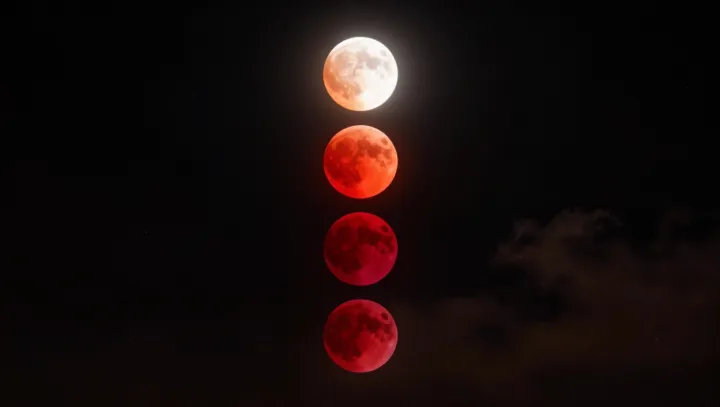
Earth's shadow does not entirely extinguish the Moon. It paints it red. During a total lunar eclipse, the planet blocks direct sunlight, but its atmosphere bends a small fraction of that light into the shadow, where it reaches the lunar surface and returns to our eyes.
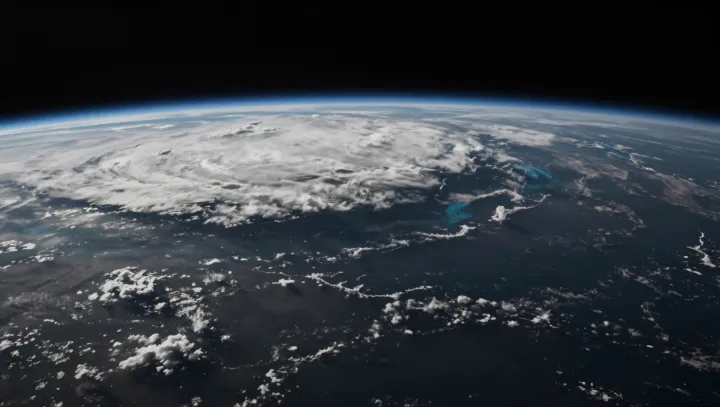
The atmosphere is a selective filter, not a simple window. Sunlight contains a range of colors, but molecules in the air scatter shorter blue wavelengths more readily than longer red ones, a process called Rayleigh scattering. The effect is familiar at sunset, when sunlight travels through a greater thickness of atmosphere before reaching the ground. Red light survives the journey more readily. During an eclipse, atmospheric refraction bends some of that surviving light around Earth and into the umbra, the darkest part of its shadow. The Moon reflects it back toward Earth.
No two red Moons need look alike. Clouds, dust and volcanic aerosols along the paths sunlight takes through Earth's atmosphere can dim or alter the color of the light that reaches the Moon, while the Moon's route through the shadow also affects its appearance. An eclipse may look coppery, brown or unusually dark. The hue is not generated by the lunar surface; it is sunlight filtered through the air at Earth's edge. In that dim glow, the Moon carries the color of a world it cannot see.