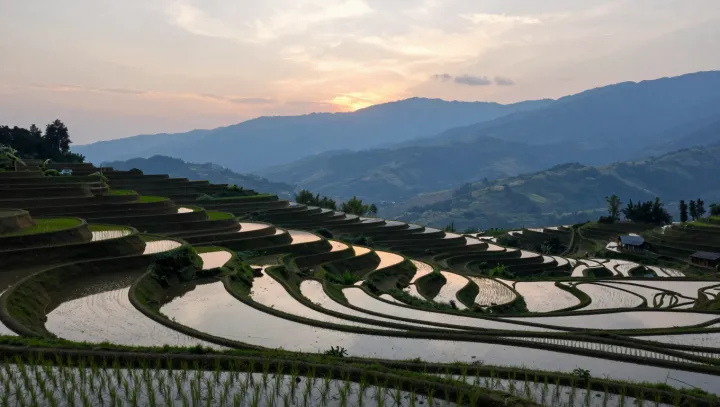
Flooding gives rice an advantage while setting a microbial trap. On mountain slopes, terraces follow the contours of the hillside, creating level fields that hold water and make cultivation possible. Beneath that water, the conditions that hinder many weeds also favor organisms capable of producing methane, a potent greenhouse gas.
The weed advantage is selective, not absolute. Water slows the movement of oxygen into soil, making germination and root growth difficult for many plants that are not adapted to saturated ground. Rice can tolerate flooding because tissue called aerenchyma carries oxygen from its shoots to submerged roots. Some weeds, though, are adapted to wet conditions and can survive alongside the crop. Depth and duration matter; a flooded field is no guarantee of a weed-free harvest.
The climate cost begins where oxygen runs out. As soil organisms consume the available oxygen, decomposition continues through anaerobic processes. Among the participants are methanogenic archaea, which produce methane from compounds generated as organic matter breaks down. Some methane is consumed by other microbes before it escapes, but some travels through rice plants or rises in bubbles. Draining fields periodically can reduce methane emissions by allowing oxygen back into the soil, although the practice can affect water management and other emissions, including nitrous oxide. The surface may look still. Below it, the bargain continues.