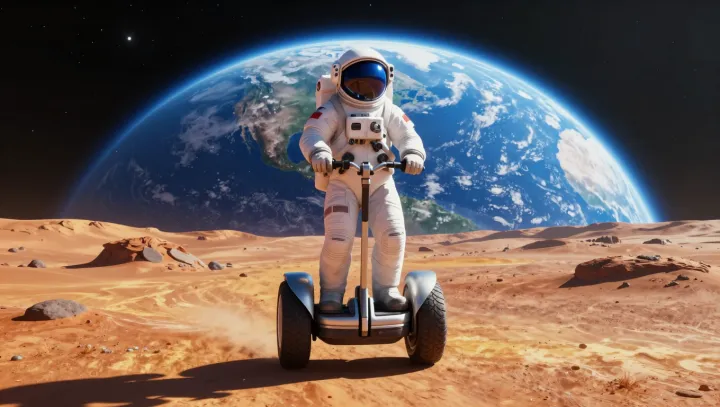
A lighter ride is not necessarily an easier one. An illustration of an astronaut on a two-wheeled vehicle suggests a nimble way across rocky ground, but the physics of low gravity introduces a stubborn contradiction: the vehicle presses less firmly against the surface while retaining the same resistance to changes in motion.
Grip would be the first casualty. On level ground, lower gravity reduces the normal force pressing the tires down, limiting the friction available for braking and turning, although actual grip also depends on tire design and soil conditions. Inertia does not shrink. The combined mass of rider and machine still resists acceleration, deceleration and changes of direction. A maneuver that feels manageable on Earth could therefore demand more stopping distance or a gentler turn. Loose regolith complicates matters, shifting beneath the wheels instead of providing a firm surface.
Balance brings its own penalty. A bump that lifts a wheel could leave it airborne longer in weaker gravity, interrupting the contact needed for steering and braking; a bulky suit could also restrict the rider's ability to shift position. A wider vehicle or additional wheels might offer more stability, though each adds mass and design tradeoffs. The illustration is an imagined scene, not evidence of a tested machine. Its appeal lies in that tension: two wheels promise freedom, but the ground may be reluctant to hold them.