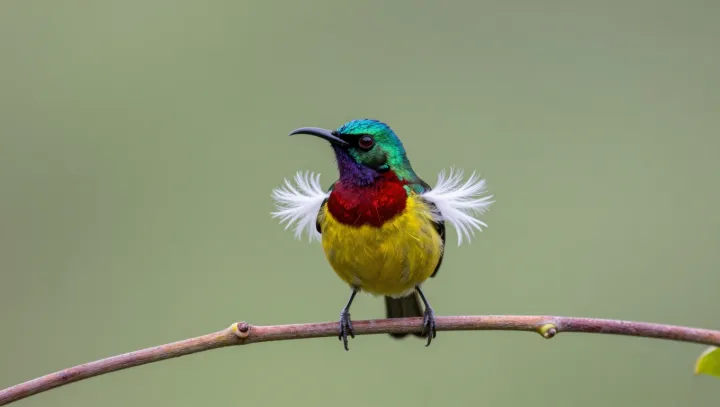
The purple-rumped sunbird does not drink through its bill as if it were a straw. The distinction matters. Its slender, curved bill helps the bird reach into flowers, but the tongue does the gathering, carrying nectar back into the mouth through repeated movements.
The tongue is a subtler instrument than the bill suggests. Its tip is divided and fringed, giving it a brushlike appearance; contact with nectar allows liquid to collect among those fine structures. Capillary action, the movement of liquid through narrow spaces, can help explain how nectar is held there. Surface tension also matters. Exactly how much each physical process contributes in this species is less certain than the basic division of labor: the bill provides access, while the tongue collects the reward. Once withdrawn, the tongue delivers the liquid into the mouth, and the bird can reach into the flower again.
Nectar alone is not the whole story. Purple-rumped sunbirds also eat small insects, adding animal food to a diet that draws heavily on flowers. Their visits can move pollen between blooms, although not every visit results in pollination; contact with a flower's reproductive structures matters. The arrangement is not a simple bargain, since the bird is feeding for itself, not tending the plant. At the flower's opening, the curved bill frames the action while the finer instrument disappears from view.