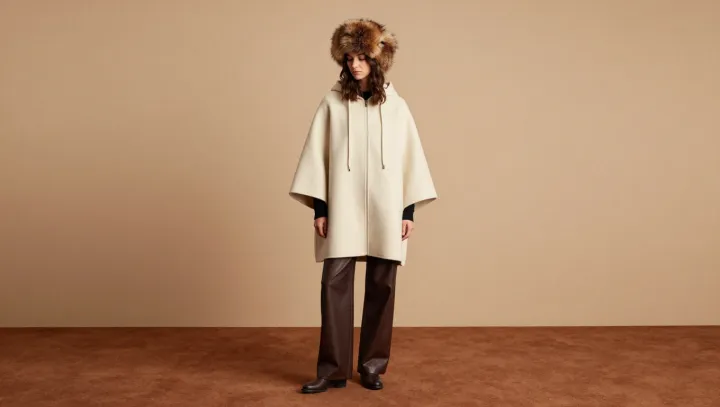
Contrast can make an outfit feel more unified than a perfect match. A white hooded cape stands apart from dark brown trousers, while a brown hat picks up the color below and ties the look together. The distinction is deliberate. Instead of asking every piece to blend in, the combination gives each one a role.
Repetition does the quiet work. The hat and trousers create a visual echo across the cape, drawing the eye from top to bottom; the white layer, meanwhile, gives those darker pieces a clear frame. Color value, the relative lightness or darkness of a shade, matters here: the distance between white and brown makes the silhouette easier to read. A wardrobe of near-identical neutrals can be elegant, but slight differences between similar shades may look accidental when they sit side by side.
Restraint is more persuasive when it leaves room for difference. The cape supplies volume and a bright focal point, while the trousers give the outfit a darker base and the hat brings that color back into view. Neither brown piece needs to match the other exactly to make the connection apparent. The result is a look with both rhythm and breathing room, held together not by sameness but by the space between its tones.