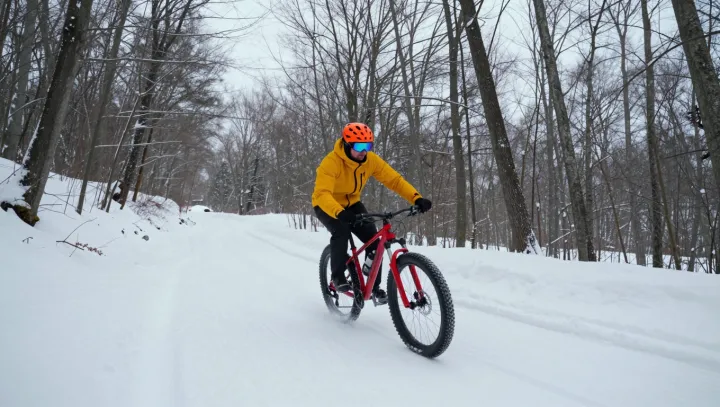
A softer tire can make a bicycle faster where the ground itself gives way. On a snowy forest trail, the fat bike trades the crisp efficiency prized on pavement for something more useful: a broad footprint that keeps its wheels from digging into the surface. The distinction is not subtle.
Snow rewards flotation more than rigidity. When tire pressure falls, the tire deforms and its contact patch grows, spreading the combined weight of bike and rider over a larger area. That reduces pressure on the snow, so the wheel is less likely to sink deeply and push a mound ahead of it. The wider patch can also improve traction, allowing the tread to grip more of the surface, though ice and loose powder remain unpredictable. Width helps, but pressure matters too.
Pavement exacts a different price. A soft tire flexes more as it rolls, and that repeated deformation dissipates energy as heat, increasing rolling resistance on a smooth, hard surface. Snow can reverse the bargain: the energy saved by avoiding deep ruts may outweigh the extra energy lost in the tire. Riders must still respect the tire and rim manufacturer's pressure limits, since too little air can leave the rim vulnerable to impacts or allow the tire to shift. The forest offers no universal setting. Between the hard road and the yielding trail lies a choice about where the bicycle should give.