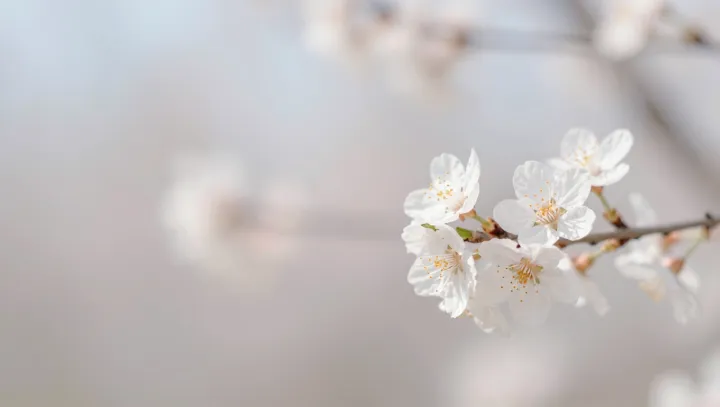
Cherry blossoms are more than a seasonal spectacle: their flowering dates preserve evidence of springs long before thermometers became common. Brief is their display. White petals and golden stamens may draw the eye, but it is the timing of their appearance that gives scientists a window into the past.
The historical record is unusually rich, though hardly flawless. In Kyoto, diaries and accounts of blossom celebrations preserve observations across centuries; researchers compare those dates with modern temperature measurements to estimate how spring warmth varied before systematic weather records began. This is phenology, the study of seasonal events in living organisms. Warmer conditions generally hasten bud development, although winter chilling, rainfall and the particular tree variety can also affect flowering. The archive has gaps. A celebration date may reflect social custom or weather as well as the precise moment of peak bloom, so scientists must account for uncertainty rather than treat every entry as a thermometer reading.
Recent blossoms carry a warning that beauty alone cannot explain. Records indicate that flowering in Kyoto has shifted earlier as temperatures have risen, with urban heat adding to the effects of broader climate warming. The consequences reach beyond festivals. When flowering moves, the timing of food for insects and other species can move with it, potentially disrupting relationships shaped by seasonal cues. Yet individual trees do not respond identically, and an early bloom in one place cannot by itself measure global change. Beneath the petals lies a harder question: what happens when the calendar that binds species together begins to come apart?