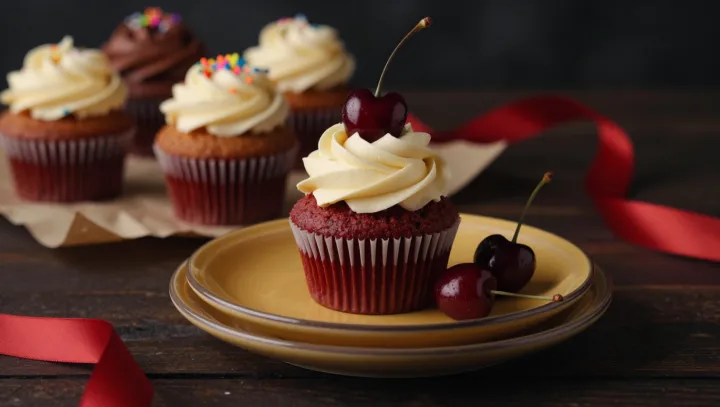
A cupcake earns its frosting long before the piping bag appears. The cake must hold its shape without becoming heavy, while the topping should offer enough structure to support a cherry. Precision beats extravagance. A restrained swirl can make a modest individual dessert look considered rather than crowded.
The batter deserves more attention than the garnish. During creaming, beating butter and sugar incorporates air that helps produce a lighter crumb; once flour is added, excessive mixing encourages gluten formation and can make the cake tougher. Fill the liners evenly. Similar portions bake at a similar pace, although oven behavior and pan material can still affect the result. A skewer inserted into the center should come out clean or with a few moist crumbs. Let the cakes cool completely before decorating, because warmth can soften frosting and blur the ridges.
The finishing touch rewards restraint. A star piping tip gives buttercream defined grooves, and steady pressure creates a more consistent swirl than frantic squeezing. Practice on a plate first. If the frosting slumps, chilling it briefly can help it hold its shape; if it feels too stiff to pipe, allow it to soften slightly. Pat cherries dry before placing them on top so excess juice does not streak the frosting. The cherry need not be large. Set against the ridged swirl, its small round shape gives the eye somewhere to rest.