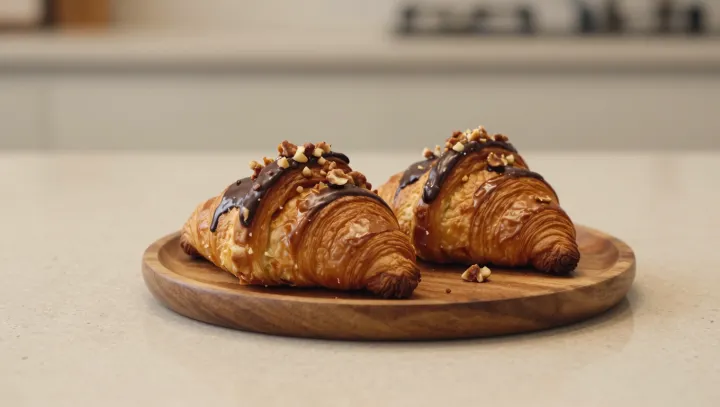
A crisp croissant begins to lose its edge as soon as it leaves the oven. Its brittle layers may look secure beneath a coat of chocolate and a scattering of nuts, but moisture continues to move through the pastry. The crunch has a quiet enemy: water.
The crust is never truly at rest. During baking, steam helps separate the layers created by lamination, while heat drives water from the surface. Once the pastry cools, moisture migration can carry water from its softer interior toward the dry crust, making those delicate layers less brittle. Humid air adds to the trouble, and sealing a croissant while it is still warm can trap vapor that condenses on its surface. Even refrigeration can invite condensation when a cold pastry returns to warmer air.
The nuts face the same bargain. Their crunch depends partly on dryness, so exposure to humid air or moisture from the pastry can make them less crisp. Temperature matters to the chocolate, too: warmth softens the coating, while poorly controlled cooling can encourage fat bloom, a pale surface caused by changes in cocoa butter crystals. Bloom does not necessarily make chocolate unsafe, but it can alter its appearance and texture. For the best contrast, let the pastry cool before coating it, keep the nuts dry, and store the finished croissant away from heat and humidity. A brief reheating can restore some crispness to an uncoated pastry, though chocolate and nuts are better added afterward. The finest crunch is a fleeting arrangement of dry layers, firm chocolate and brittle nuts.