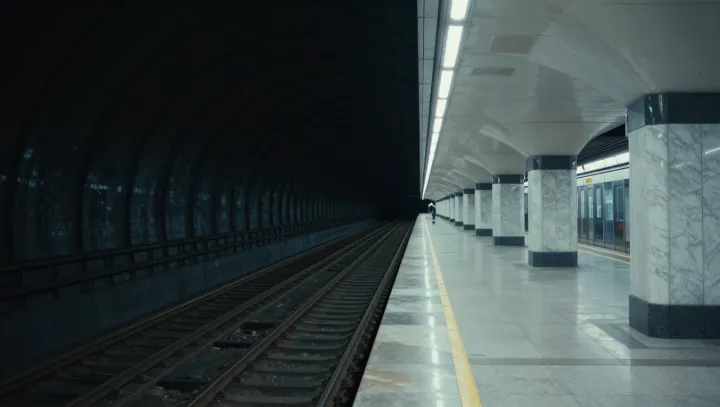
The curve is both spectacle and liability. Bright light follows the platform as the tracks converge toward a dark, ribbed tunnel, giving the station a sense of movement even when no train is present. Yet that same bend can hide passengers and doors from the operator preparing to depart. The geometry has consequences.
Sightlines, not aesthetics, govern the problem. On a straight platform, an operator may be able to look along much of the train; on a curve, the train itself and the platform's geometry can obstruct the line of sight. The position of the cab and the direction and sharpness of the bend all affect what remains visible. Distance compounds the difficulty. A person near a closing door, or someone caught between train and platform, may be outside the operator's direct view. The gap between train and platform can also vary along a curve, adding another concern for boarding and alighting.
Good design refuses to treat eyesight as the only safeguard. Closed circuit television can relay views from platform cameras to a monitor positioned for the operator, while mirrors can extend the view at some locations. Station staff and dispatch procedures may provide another check, depending on the railway's operating rules. Coverage must be tested. Cameras need to show the relevant doors and platform edge, and screens must remain readable in the conditions where operators use them. Door interlocks can prevent a train from taking power when doors are not properly closed, but they do not replace a check of the platform. Beneath the sweep of light, safety depends on what the curve conceals.