A glass tower can make sunlight a street-level hazard. Its facade need not generate heat to do damage: under the wrong conditions, it can redirect sunlight from a broad surface into a much smaller area. The result is concentrated energy, capable of scorching surfaces or deforming materials.
The curve deserves the blame more than the glass. A concave facade can act like a converging mirror: specular reflection sends light from separate parts of the building toward a focal region, raising the energy received per unit area. The effect shifts with the sun, the season and the geometry of the facade, so a pavement or parked vehicle may be exposed only at certain times. The risk is real. At London's 20 Fenchurch Street, reflected sunlight damaged a parked car, an episode that made the building's shape a matter of public concern.
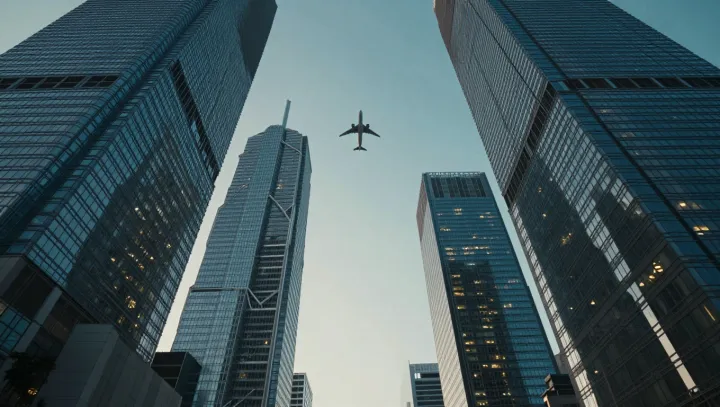
The best remedy begins before construction, not after a vehicle has been damaged. Architects can use ray tracing and solar modeling to test where reflected light will fall throughout the day and year, including on neighboring buildings and public spaces. Altering the curvature, reducing reflectivity or adding fins and screens can disperse or intercept the rays; each choice also affects appearance, cost and daylight. After trouble emerged at 20 Fenchurch Street, a sunshade was installed to address the glare. The wider lesson is architectural rather than merely optical: a facade belongs to the street as well as to the tower. Above, an airplane crosses the frame; below, the glass decides where the light goes.