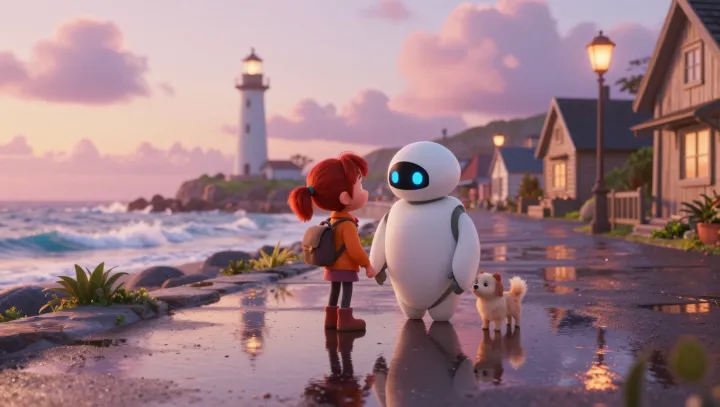
Dusk hides more than faces; it exposes bias. A metal hand locked around a child’s wrist can look oddly safe, while the same gesture from an unknown adult triggers alarm, even though only the human hand can actually care or choose. That mismatch is not an error at the margins of modern life; it is how public trust is being quietly rewired by design, liability, and marketing.
The first mistake is comfort with predictability. Machine code, built on deterministic algorithms and fail-safe protocols, feels cleaner than human impulse, so people project statistical safety where there is no moral agency at all. Studies on automation bias show operators over-rely on software outputs even when warned of error rates, and the same cognitive habit spills into the street: a robot is seen as a rule-following device, a stranger as a potential rule-breaker.
The second distortion comes from design theatre. Rounded edges, soft-light displays and child-height sensors invite anthropomorphism, so onlookers unconsciously map intentions onto circuits. Moral sense, though, requires empathy, theory of mind and affective processing in biological neural networks, none of which exist in today’s metal guardian. What does exist is a chain of accountability: a manufacturer, an insurer, a regulator. In a world anxious about blame, that visible liability stack can feel safer than a lone adult whose name and record are unknown, even if only one of them can decide to act out of love.