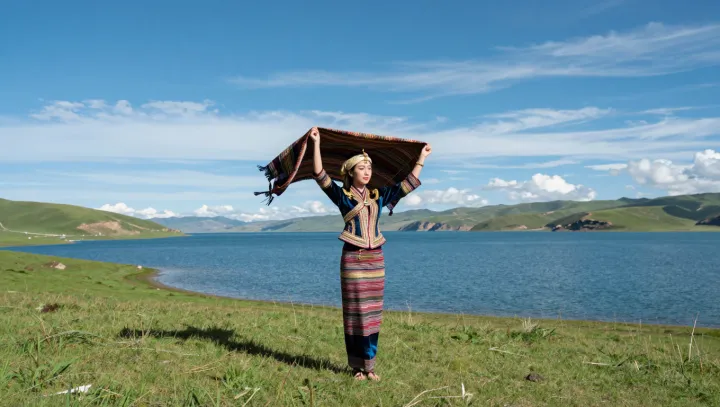
Red cloth came first, not comfort. From the high rim of Lake Toba, weavers framed a world once shattered by volcanic fire and ash, and they did it with three stark colors and a loom that functioned almost like a memory device for rules that no one dared forget.
This tradition is not quaint; it is regulatory. In the highland community, ulos textiles operate as a visible code for kinship structure and ritual authority, a kind of analog protocol layered into warp and weft, where pattern repetition, border density, and color blocks signal whether a cloth belongs on a bride, a corpse, or the shoulders of a clan leader in a mortuary feast.
Most striking is how volcanic violence is reframed as cosmic grammar. Black frequently stands for cooled lava and ancestral earth, red for blood and fertility, white for bone and cloud; within that triad, specific motifs, such as hooked lozenges and stepped rhombs, anchor ideas of upper, middle, and underworld in a visual cosmology that stabilizes memory in a seismic zone.
Power here is literally worn. Certain high status ulos, produced through laborious ikat and supplementary weft techniques, are restricted to elite lineages; their use in rites of passage effectively enforces social rank, while the strict pairing of pattern type and ritual sequence turns the cloth into a silent officiant that can outlast any single priestly voice.