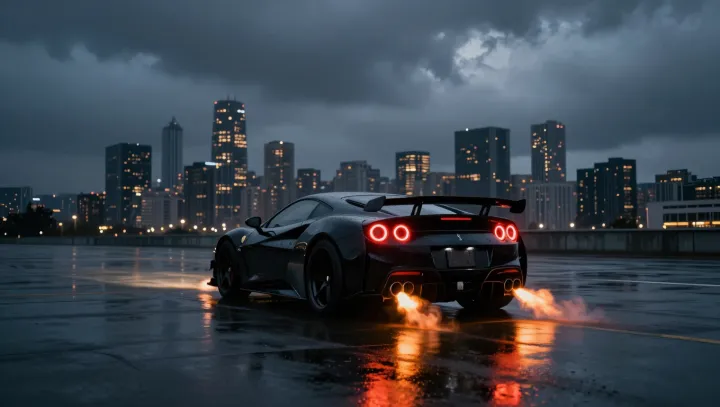
Flames at the tailpipe look like abuse; they are often proof of control. That apparent chaos rides on tightly modeled combustion, exhaust energy management, and an obsession with failure data that would bore most drivers to sleep.
The real trick is simple to state and hard to execute. Engineers stop chasing peak horsepower and start chasing repeatable cylinder pressure. Using combustion phasing maps, closed‑loop lambda control, and high‑speed knock sensors, they shape each ignition event so it sits just under the detonation cliff, where power is dense but shock loads stay predictable. Short bursts of over‑run fuel that create those Instagram flames are timed to burn in the manifold, not inside the chamber, keeping piston crowns cooler even while the show looks wilder.
Reliability, oddly, comes from designing for abuse, not for spec sheets. Finite element analysis and fatigue testing pick out the exact rod beam thickness and turbine wheel alloy that survive repeated high exhaust gas temperature without plastic deformation. Oil galleries grow wider, bearing clearances tighten, coolant flow is redirected at known hot spots around the exhaust valves. Add data logging and predictive algorithms, and the car starts protecting itself, trimming boost when oil film shear or knock intensity crosses a threshold. What looks like mechanical violence is, under the skin, a conservative risk strategy wearing a loud exhaust.