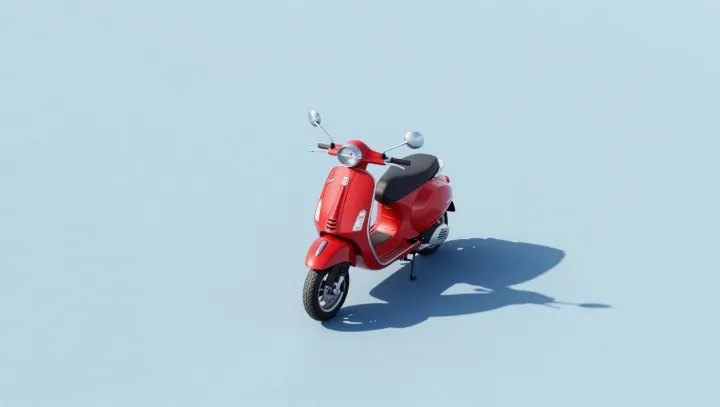
A red Vespa did not chase speed; it redefined it. The scooter framed quickness as psychological, not mechanical, turning modest horsepower and a pressed-steel monocoque into the visual shorthand for urban momentum. The body stayed familiar, almost static, while the city around it kept accelerating and it kept looking ready to slip through every gap.
The paradox is simple. The machine is slow. The experience feels fast. Step-through geometry, low center of gravity and small wheels compress distance in the rider’s mind, while the automatic clutch and two-stroke origins stripped away cognitive load. You straddle a domestic appliance, yet you move like a courier, with the engine’s high-frequency vibration acting as a constant metronome of urgency under the seat.
Design, not raw output, did the heavy lifting. The continuous, almost aerodynamic fairing turned the rider into part of a single silhouette, a kind of rolling logo. That silhouette proved endlessly reproducible in advertising, film and street photography, so the scooter’s unchanged engineering became an anchor while paint, accessories and clothes updated the story. Other scooters chased specification sheets. The red Vespa sold an archetype of city life and let incremental engineering quietly keep it just fast enough to feel ahead of the traffic.