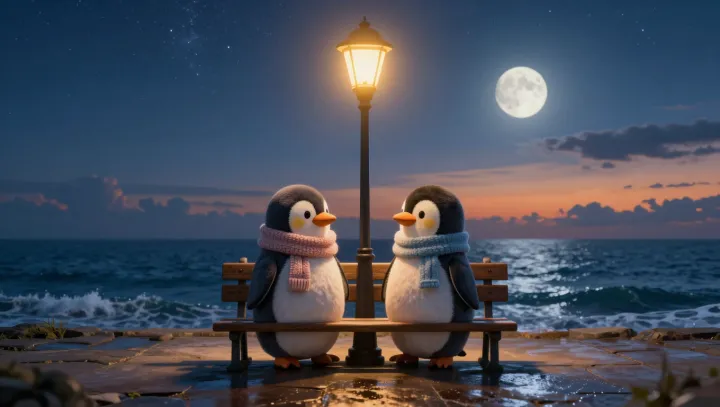
A moonlit pier with two penguins can hit harder than any prestige drama. That is not sentimentality; it is how adult brains compress and store experience. With few visual elements, the scene lowers perceptual noise, so primary visual cortex and association areas do not waste resources on costume seams, background extras or camera tricks, but on posture, spacing and that thin line of reflected light on the water.
The real hook is not plot but prediction error. When a static, almost childlike cartoon hints at intimacy or loss, it violates the brain’s statistical model that “simple drawings are for light feelings,” and that mismatch spikes activity in the amygdala and anterior cingulate cortex. Those regions tag the frame with emotional salience and pass it to hippocampal circuits for long-term potentiation, where fewer, cleaner cues are actually easier to index and retrieve than crowded live-action scenes.
Adult viewers are not past cartoons; they are more vulnerable to them. Sparse lines force the prefrontal cortex to fill gaps with personal narratives, so the penguins quietly borrow faces, breakups and reconciliations from private history. High-budget drama dictates music, dialogue and facial micro-movements, leaving less space for projection, while the pier and its two small figures sit in memory as an open slot the brain keeps rewriting.