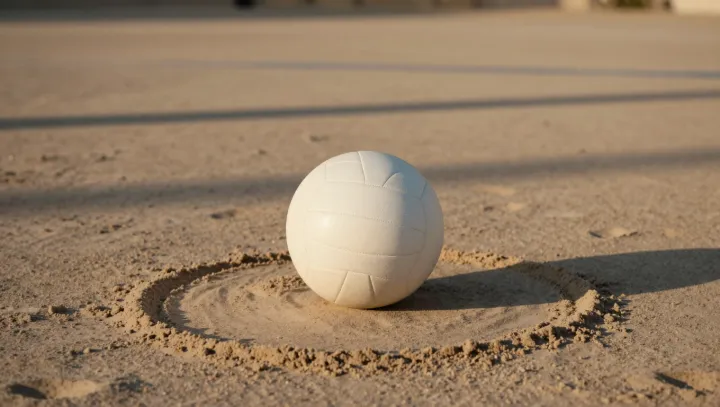
A chalk puff at the baseline exposes a harsh truth about human sight. Laboratory vision, for all its controlled precision, rarely matches the chaos of a spinning ball, drifting dust and roaring crowd compressed into a single frame of attention.
The harder claim is that athletes on dusty courts run a tougher perceptual gauntlet than most research volunteers. Under real play, the visual cortex must fuse retinal blur, motion parallax and contrast loss from dust while the oculomotor system issues rapid saccades as the ball curves, skids and finally kisses or misses the line by millimeters. Punchy stakes. A point, a set, a career hinge on an interpretation formed within tens of milliseconds, with no chance to replay or average multiple trials the way psychophysics protocols routinely allow.
What pushes vision near its edge is not just poor optics but the binding of sight to action. A player does not simply inspect; the motor cortex is already preparing a swing or a lunge, coupling perception with feedforward control and error monitoring in one inseparable burst. In many eye‑tracking studies, by contrast, the gaze follows predictable targets on high‑contrast screens, under stable luminance, with noise filtered out and decisions detached from real physical cost. Short pause. In that modest gap between sterile fixation cross and dusty chalk cloud lies the margin where human vision shows its true limits.