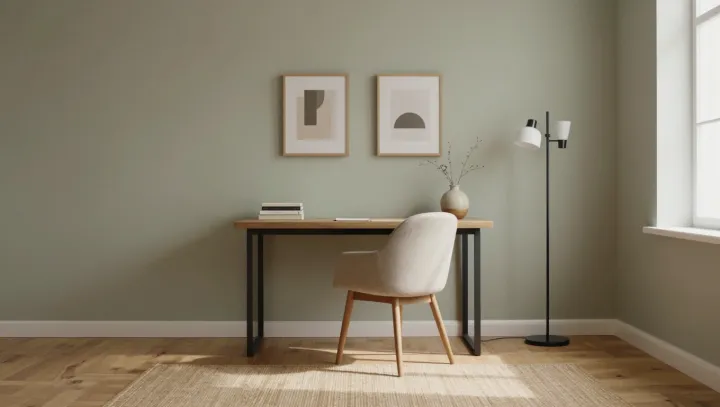
Warm beige wins. Not the glowing dashboard of apps and multi-monitor rigs that crowd so many desks, but a near-empty corner with muted walls, a soft lamp and a plain wooden surface is now outperforming expensive productivity gear in controlled attention and stress tests.
The bias is obvious. Researchers report higher sustained attention and fewer commission errors when participants work in low-clutter, warm-toned rooms, while salivary cortisol and heart rate variability point to lower sympathetic arousal. Visual noise taxes working memory; every icon, cable and notification is another item the prefrontal cortex must inhibit through top-down control, a process linked to elevated catecholamine release.
Calmer is sharper. Soft, indirect light reduces glare that drives pupillary strain and headaches, which in turn erode executive function and selective attention. Warm beige walls sit in a perceptual middle ground: enough contrast to define space, not enough to trigger constant orienting responses in the superior colliculus. Wooden textures add low-level biophilic cues that have been tied to reduced amygdala activation, offering a quieter baseline from which any demanding task stands out.
Tech can still assist, but only when it respects this sensory budget. Devices that mute alerts, simplify visual fields and support circadian-friendly luminance leverage the same physiology that makes that almost-empty corner so effective.