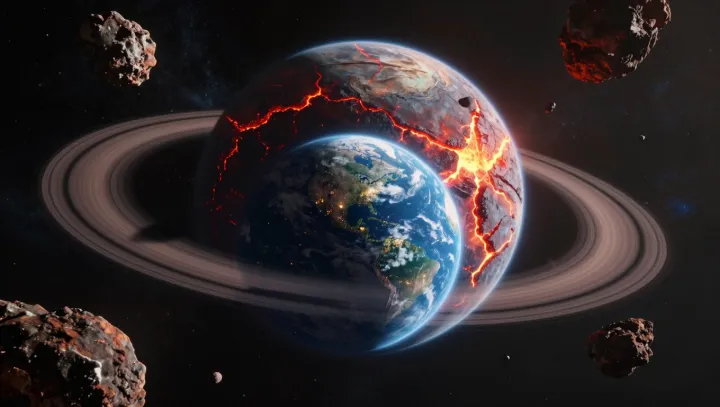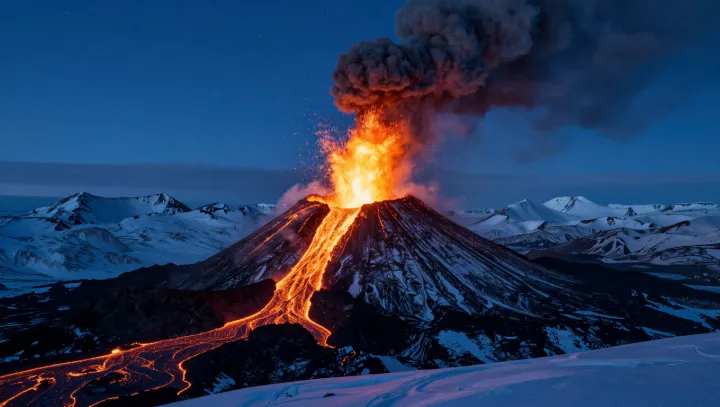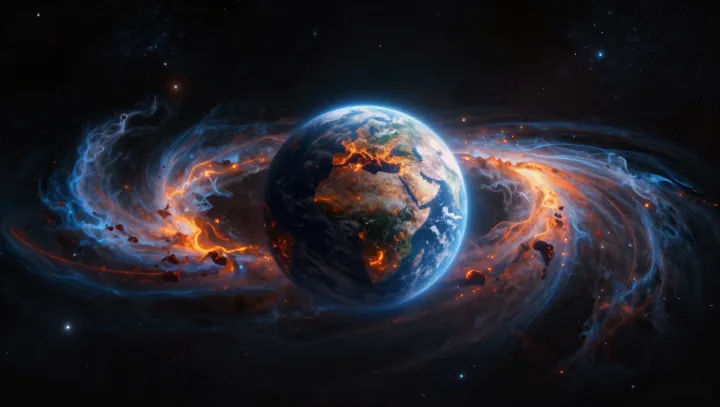
A lava-lamp planet sounds doomed, yet physics quietly keeps it alive. An Earth-sized body packed with rock and metal has strong surface gravity, so even when its crust melts into magma, most material stays bound instead of streaming away into space as dust or gas.
Counter to intuition, extreme heat near a star does not instantly erase a solid world; what it strips first is atmosphere, through processes like hydrodynamic escape and photoevaporation driven by high-energy photons. Rock has a far higher mean molecular weight than hydrogen or helium, so escape velocity remains larger than the thermal speeds of most ions, and only the thinnest vapor of silicate can be lost. The planet becomes a compact core with a molten skin, not a dispersing cloud.
The most unsettling part is that tidal heating and stellar irradiation keep the surface in motion yet help maintain order. Strong tidal locking can freeze one hemisphere into a permanent dayside furnace, where magma oceans convect, radiate heat and then cool at the terminator, letting lava solidify before it is reheated on slow cycles. Radiative equilibrium and Roche limit constraints draw a narrow safe zone: close enough for a glowing surface, far enough that gravity still outruns evaporation.