Warm daylight on pale wood often feels more expensive than any designer sofa. That judgment runs against the retail script, yet visual neuroscience and interior research keep circling back to the same point: the human eye reads space, light and proportion as status signals long before it notices brand labels or joinery tricks.
Luxury, in a stripped room, is really about allocation. Empty floor and blank wall give luminance more surface to bounce from, raising perceived brightness and evenness of light, which studies link to comfort and lower visual fatigue. With clutter gone, the field of view simplifies; the brain’s figure–ground processing spends less effort sorting noise, so the few objects left gain weight and presence.
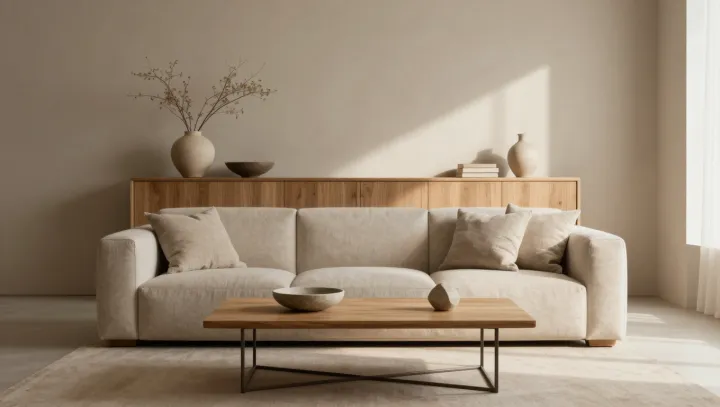
That is why a handful of matte ceramics on a pale timber shelf can feel almost ceremonial. Each piece gets negative space, like white margin around a fine print, and that scarcity reads as value. Pale wood shows grain, edge profiles and joints with almost forensic clarity; any imprecision is exposed, but so is every careful decision about proportion and tactility.
Cost, then, quietly migrates from quantity to calibration. Money shifts from extra armchairs to higher quality finishes, from decorative layers to better glazing and color rendering, which improve daylight and reveal subtle tone variations. When a living room is stripped back to those essentials, what remains is not less luxury, but a more honest version of it.