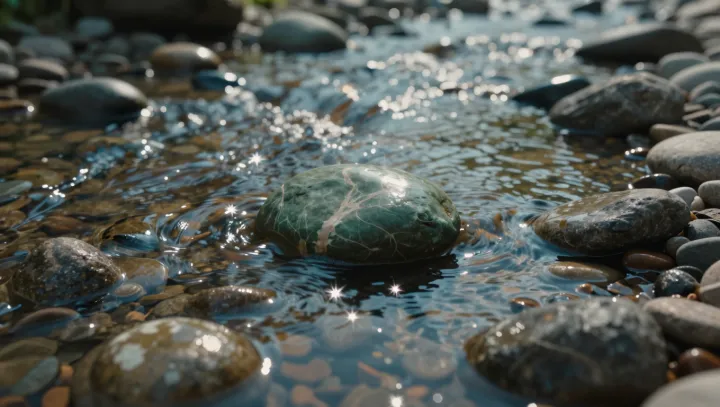
Water cheats the eye first, not the camera. What looks like a solid white ribbon in a long‑exposure frame is really nothing more mystical than sampled chaos, integrated by a sensor that is blind to moments and loyal only to totals. When a photographer drags the shutter for fractions of a minute, each droplet races through many positions, and the sensor accumulates their luminance into one continuous veil while rocks and banks remain fixed reference points.
The real trick is selective surrender to blur. Photographers pick a shutter speed that is long enough to register temporal averaging yet short enough that specular highlights, boosted by Fresnel reflection and high local contrast, flare in the same pixels for only an instant. Those flashes saturate or nearly saturate without smearing, so bright needles of light sit atop a gauzy current. Aperture and neutral‑density filters extend exposure without overexposure, while low ISO keeps noise down so the semi‑transparent flow reveals stones and sand beneath.
What looks like magic is really ruthless control of variance. By treating moving water as a continuous signal and the shutter as a rectangular integration window, photographers exploit motion blur, photon shot noise, and dynamic range the way an engineer handles filters and gain, until the frame holds two incompatible impressions at once: time stretched in the body of the river, and time frozen in each glittering point.