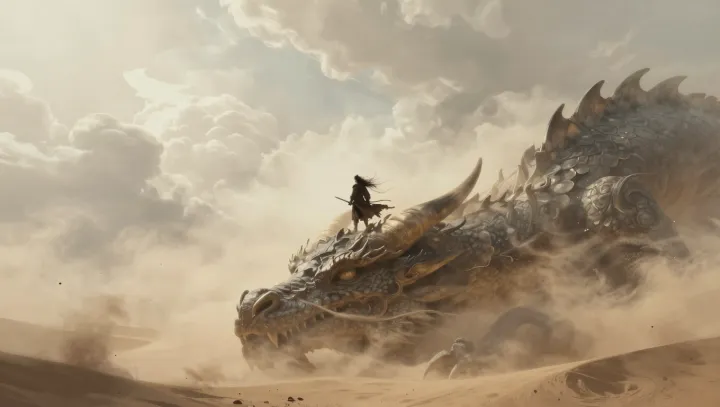
Stranger than it sounds, fiction becomes more honest when it stops pretending to be real. A lone warrior on an elephant in a storm is not reportage; it is a diagram. By erasing everyday detail, the image behaves like a visual equation that isolates three variables: fear, courage, isolation.
The bet here is simple. Brains care less about accuracy than about pattern compression, a function rooted in neural coding and predictive processing. Naturalistic drama floods the cortex with social noise: accents, furniture, side plots, status games. Each cue demands working memory, splitting attention across dozens of low‑stakes decisions about who these people are and what they might also want.
Fantasy cuts the bandwidth. One figure. One beast. One violent sky. With context stripped, the amygdala and insula can fire on a cleaner signal for threat and bodily risk, while mirror neuron systems latch onto posture and micro‑gesture instead of wardrobe or small talk. The scene stops asking, Would a real soldier do this, and starts asking, Could I stand there. That shift from plausibility check to self‑simulation is why the impossible rider can feel more emotionally accurate than the most diligent kitchen‑sink script.