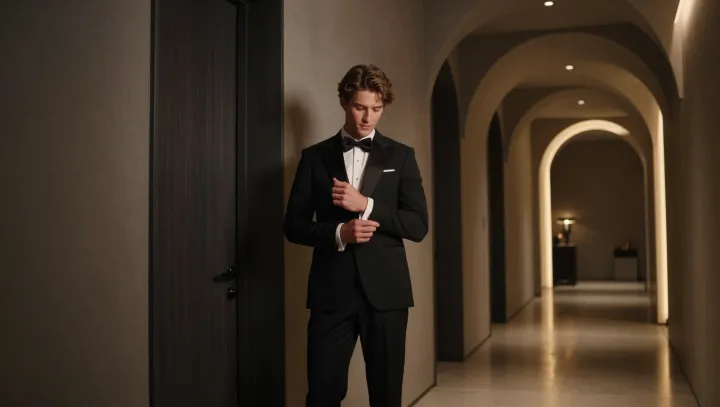
A corridor can decide a career. In controlled experiments, psychologists report that the same male face, shot in the same pose, is rated as more competent, more dominant and more leader-like when two details change: the sharpness of the suit and the softness of the hallway light. Nothing else moves. The voice is silent, the biography absent, yet the verdict shifts.
The uncomfortable truth is that judgment starts with optics, not arguments. When a blazer is taken in by a few millimeters, shoulder line and waist suppression exaggerate the torso’s V-shape, a cue linked in social perception research to higher status and greater perceived agency. Under warmer, more diffuse illumination, facial contrast increases, micro-shadows around the eyes soften, and observers report higher scores on trust and strategic ability, even though the underlying facial morphology is identical.
What looks like style is actually fast cognition at work. Rapid trait inference, sometimes called thin-slice judgment, recruits visual cortex and prefrontal circuits to produce near-instant classifications of competence and dominance long before deliberate reasoning or semantic memory kick in. By the time a candidate reaches the conference room door, tailoring and hallway lux levels have already nudged expectations of how decisive he is, how persuasive he will be, and whether others are prepared to follow his lead.