The Silent Man Who Grabs Your Brain

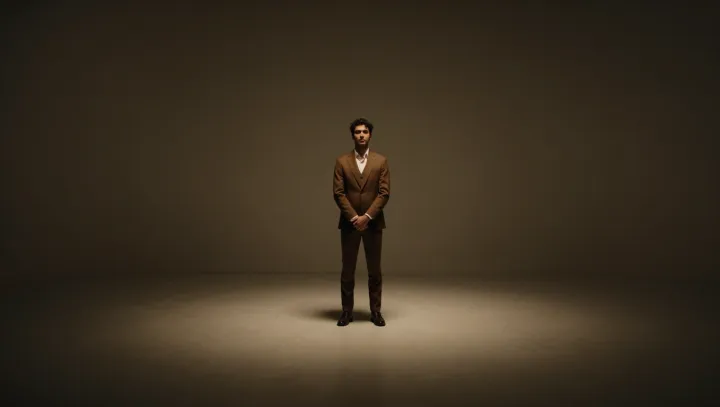
Stillness, not motion, can dominate your attention because prediction errors, novelty detection, and mirror neuron suppression all spike when a human body refuses to behave as expected.

Stillness, not motion, can dominate your attention because prediction errors, novelty detection, and mirror neuron suppression all spike when a human body refuses to behave as expected.

A single distorted cloud of gas and dust can both hide forming stars and glow in thin filaments, because the same radiative transfer and shock physics that block light in dense cores ignite it along fractured edges.
2026-08-14

A single warm pendant in a beige corner can reduce evening eye strain by easing contrast, stabilizing circadian signals, and lowering visual system load without changing screen habits.
2026-08-07

Ultra‑simple tree‑in‑a‑circle emblems win logo recall because the visual cortex prioritizes high‑contrast, low‑detail shapes before processing glossy, textured complexity.
2026-08-11

Minimalist car photos trigger status perception more strongly than spec sheets by exploiting visual scarcity, cognitive load limits, and luxury branding cues.
2026-08-14

A flat, candy‑colored badge with a spyglass girl wins attention and memory faster than text because it hacks visual cognition, pattern recognition, and emotional tagging in a few milliseconds.
2026-08-07

Two dried lavender bundles emit enough volatile molecules to alter indoor air composition and subtly steer emotional response to a still life scene.
2026-08-06

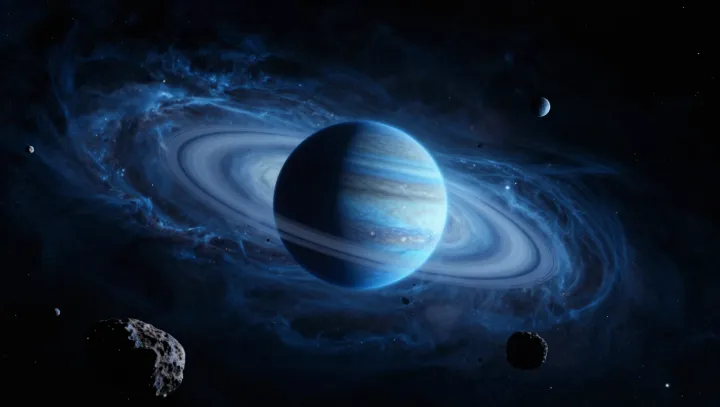
A thought experiment calculates how close a ringed blue gas giant must orbit to outshine the full Moon by thousands of times while staying dynamically stable and still safe for human eyes.
2026-08-10

Bellflowers rely on a finely tuned hydraulic system, not rigid tissue, to hold top-heavy blooms upright, using turgor pressure, cell walls and vascular flow as a living brace.
2026-08-10

A concept park fuses lotus pond microclimate, hillside wind turbines and subtle spatial design to cool air, cut noise and choreograph visitor movement with no visible signage.
2026-08-19

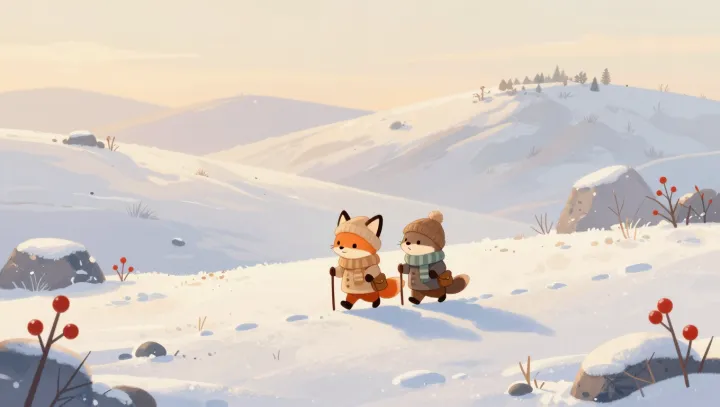
Foxes and otters stay warm on snowy slopes through dense fur, compact body geometry, air trapping, countercurrent heat exchange and energy‑saving movement patterns.
2026-08-06