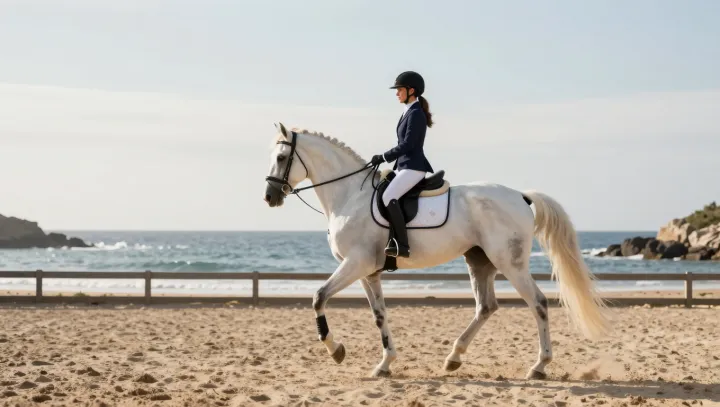
Salt in the air, not blood, now frames movements once drilled for war. What looks like a seaside leisure show is in fact the afterimage of cavalry doctrine, translated into choreography instead of combat.
The uncomfortable truth is that dressage did not soften; it was rebranded. Where war manuals once specified collected gaits to keep horses compact under spear and cannon, modern rulebooks describe those same piaffes and pirouettes as marks of elegance, scored in quiet coastal arenas. The arena boards, the sponsor logos, the manicured sand are the visible expenses, but trainers argue the real outlay is time: years of operant conditioning, of shaping micro-responses to pressure from hand, seat, and leg until they become conditioned reflex arcs rather than conscious choices.
More provocative still is the claim that the arena’s true luxury is neurological. Elite riders speak less about prestige and more about myelination, about repeating half-halts and lateral work until neural circuits in both species fire as if on a shared loop. Muscle memory, proprioception, even vestibular adaptation are trained inch by inch, stride by stride, so that a shift of weight can replace a shouted command. On the shore, under grandstands and hospitality tents, the spectacle sells serenity, but inside the horse’s spinal cord and the rider’s motor cortex runs the old script of maneuver, only stripped of armor and rewritten as art.