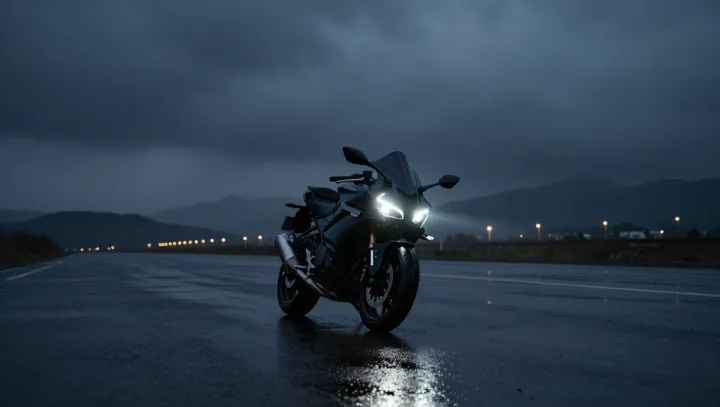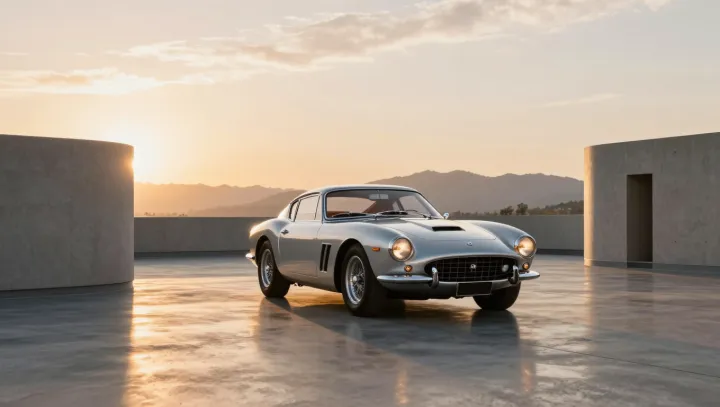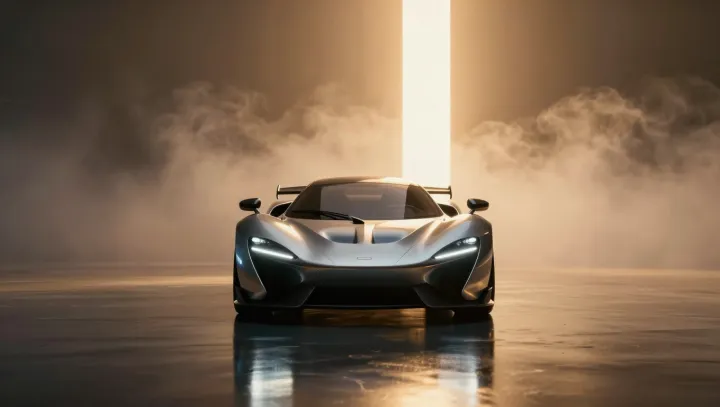
Reflections, not horsepower, do most of the visual heavy lifting on a parked supercar. Across the body, designers tune light like engineers tune airflow, using controlled gloss, micro‑texture and glass curvature to hack the eye’s sense of motion and force even when the vehicle never moves.
Most striking is how fake speed lives in the highlight lines. Thin, continuous specular streaks are steered along the sheet metal using surface curvature analysis and Class‑A surfacing, so daylight slides in one clean vector rather than breaking up. To the human visual cortex, which relies on motion parallax and edge continuity, that uninterrupted highlight mimics a blur, so a static fender feels already in transit.
More aggressive still is the deliberate use of haze. Paint chemists adjust clear‑coat scattering and metallic flake orientation to create a soft halo around bright reflections, echoing what atmospheric optics call forward scattering. That subtle glow thickens the silhouette, so the car reads heavier, denser, more muscular, without adding a gram of mass. Around intakes and creases, designers tighten the gloss window, forcing sharp, high‑contrast reflections that trigger the same contrast‑sensitive neurons used to read tool edges or animal claws.
Glass and lamps finish the illusion. Windshields gain slight toroidal curvature so skyline reflections bend as if wrapped around a fast projectile, while internal lens patterns in headlamps break incoming light into layered bands, a controlled form of diffraction that hints at depth and circuitry. Park the car in a dull garage, and those engineered reflections still script a story of speed and power on bare metal and glass.