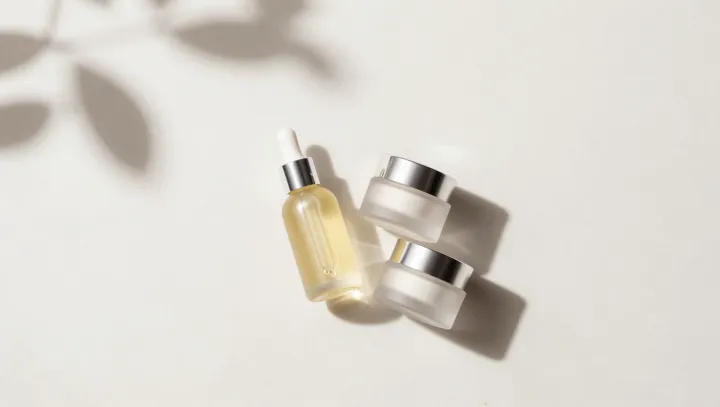
The bottle is innocent; the hardware is not. What looks like a pure glass vessel is usually a small mechanical system in disguise, where plastic parts grind, flex and age against each other every time the product is used.
Most so‑called glass skincare packs rely on plastic at every functional interface, and that design choice quietly turns daily routines into abrasion tests. Pump dispensers use polyethylene or polypropylene pistons sliding inside polymer sleeves; each stroke creates mechanical wear, releasing micron‑scale fragments that can migrate into the emulsion through the dip tube. Inside the neck, a polyethylene wiper scrapes droppers and applicators to control dosing; that contact area experiences repeated shear stress, a textbook setup for particle shedding under tribology and surface fatigue principles.
The problem deepens when chemistry joins the mechanics. Many bottles use epoxy‑based or acrylic internal coatings and elastomer gaskets to improve barrier properties, yet surfactants, preservatives and low‑level solvents in serums can promote polymer swelling, microcracking and stress corrosion, loosening tiny chips into the bulk formula. Even the thread finish on the glass is usually capped with a multilayer closure: plastic liner, sealing ring, decorative shell. Each open‑and‑close cycle introduces frictional contact and compressive strain, again driving micro‑wear. So the glass shell stays pristine on the vanity, while an invisible plastic ecosystem works — and erodes — inside.