Cracked ice is not always failing ice; that is the unsettling truth a frozen lake offers. A visible fracture often means the sheet is flexing as a continuous elastic plate, spreading applied load as bending stress over several square meters instead of collapsing in one neat hole under a boot.
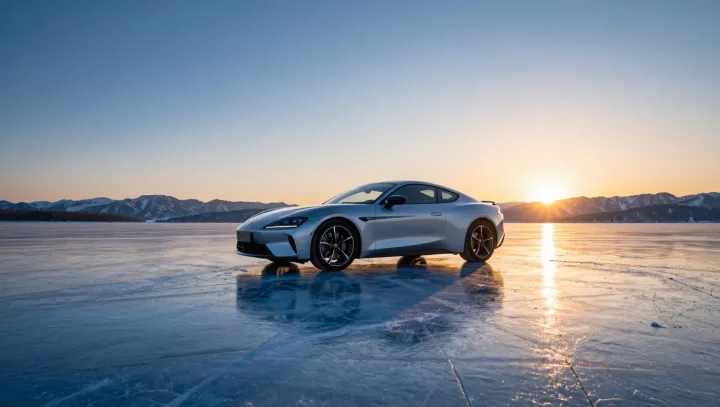
The paradox starts with pressure. A human step can focus body weight onto a few square centimeters, driving contact pressure well above the compressive strength of near-shore, slushy or sun-rotted ice, so a small plug can punch out. A car, absurd as it seems, spreads far more total weight across four wide tires, lowering average pressure on intact zones and engaging what engineers call flexural strength and bearing capacity of the whole ice plate rather than just a column beneath one heel.
More unsettling is how thickness scales the game. Structural mechanics shows that the flexural strength of a plate scales roughly with thickness cubed, so an extra small increment of clear, cold ice multiplies load capacity. Existing cracks still matter, but many act as partial rather than complete fractures; if they do not run through the full depth, stress can arch around them, with compressive stress closing the gap while tensile stress is carried by unbroken ligaments of ice. That is why a car can sometimes idle on a crazed white mosaic while a misplaced footstep near a warm shoreline slushes straight through.